

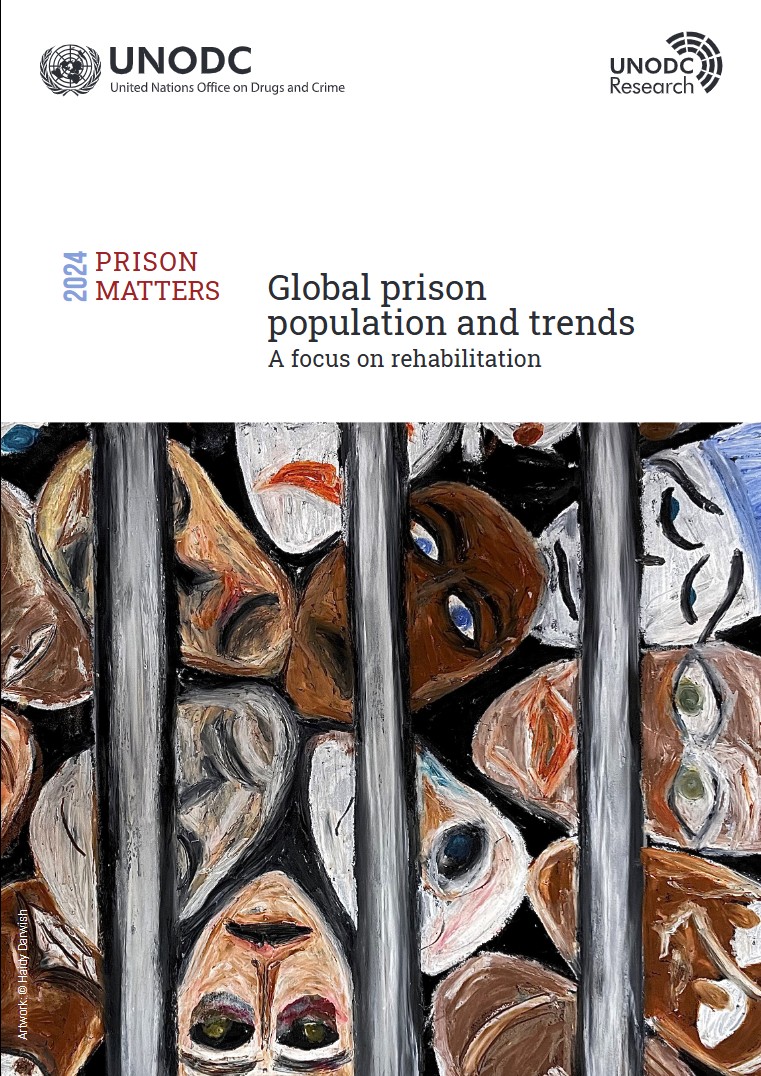
According to the report “Global Prison Population and Trends: Focusing on Rehabilitation” by the United Nations Office on Drugs and Crime (UNODC) published on Nelson Mandela International Day, the global prison system is facing several significant challenges.
Data shows that over the past decade, despite a temporary decline during the COVID-19 pandemic, the global prison population has continued to increase. Between 2012 and 2022, it increased by 5.5 percent from 10.9 million people to 11.5 million people. The Americas is the region with the second-highest prison population, particularly in North America and South America with 1.8 million people and 1.3 million people respectively.
Another concerning situation is the number of pre-trial detainees, which amounts to 3.5 million people or approximately one-third of all detainees. While the proportion between men and women is similar at 31 percent and 30 percent respectively, in some regions such as Oceania and Africa, the proportion of women awaiting trial is as high as 40 percent, while in the Americas it stands at 35 percent.
Prison overcrowding remains a significant challenge, with 60 percent of countries worldwide with available data having prison populations at or above capacity, and one in five countries having prison populations exceeding capacity by up to 150 percent. This is particularly evident in Africa and the Americas, where 70 percent of countries report prison overcrowding.
Particularly concerning is the situation of deaths in prison, with one in ten deaths resulting from suicide, at a rate of 34.2 per 100,000 population, which is higher than the general population rate of 9.2 per 100,000. Additionally, the homicide rate in prisons is also higher than in the general population, at 12.2 per 100,000 compared to 5.8 per 100,000 in the general population. The Americas has the highest prison homicide rate at 18.3 per 100,000.
However, there are positive signs in prisoner rehabilitation, with prison administrators at 80 percent developing specific strategies for rehabilitation and reintegration into society of detainees, and half providing opportunities for prisoners to participate in planning. Although there is still no clear data on the actual implementation of these strategies.
Given this situation, it is essential that countries increase their efforts to develop evidence-based public policies in crime prevention, particularly among youth, improving living conditions in prisons, developing reintegration strategies, and creating guarantees for equal access to justice.
Read the full document here.