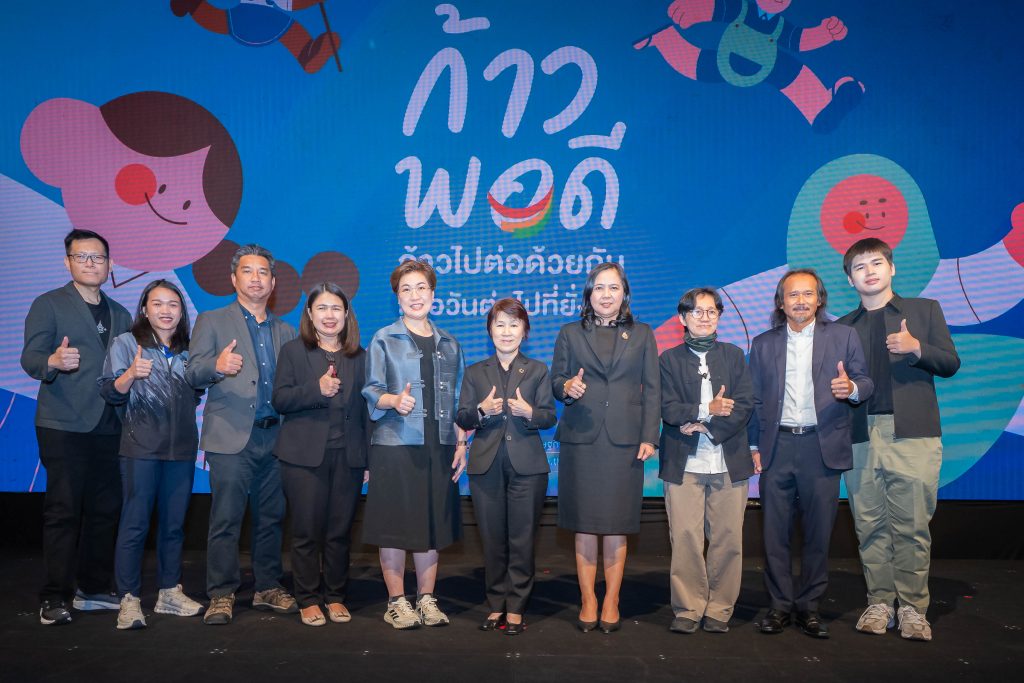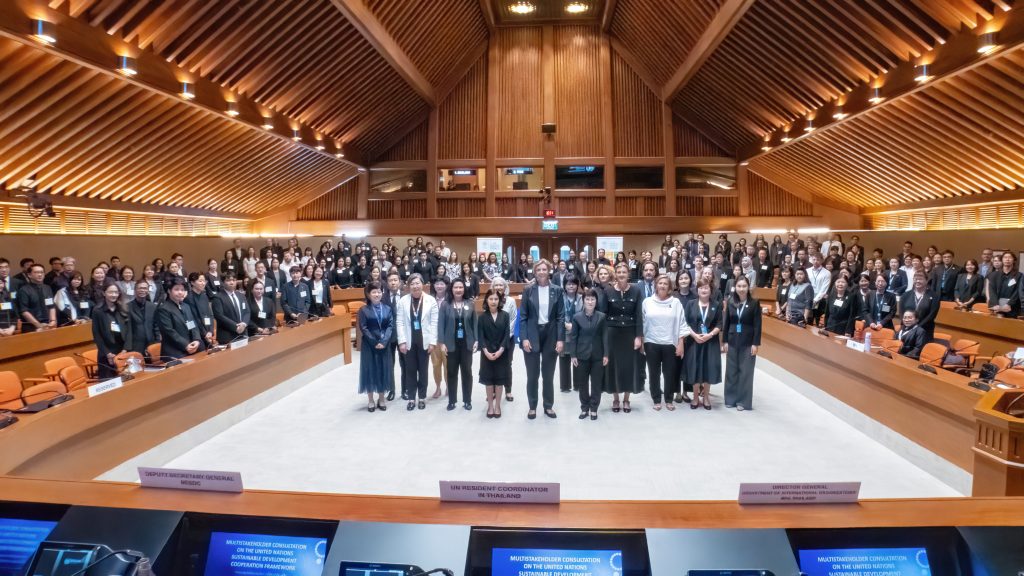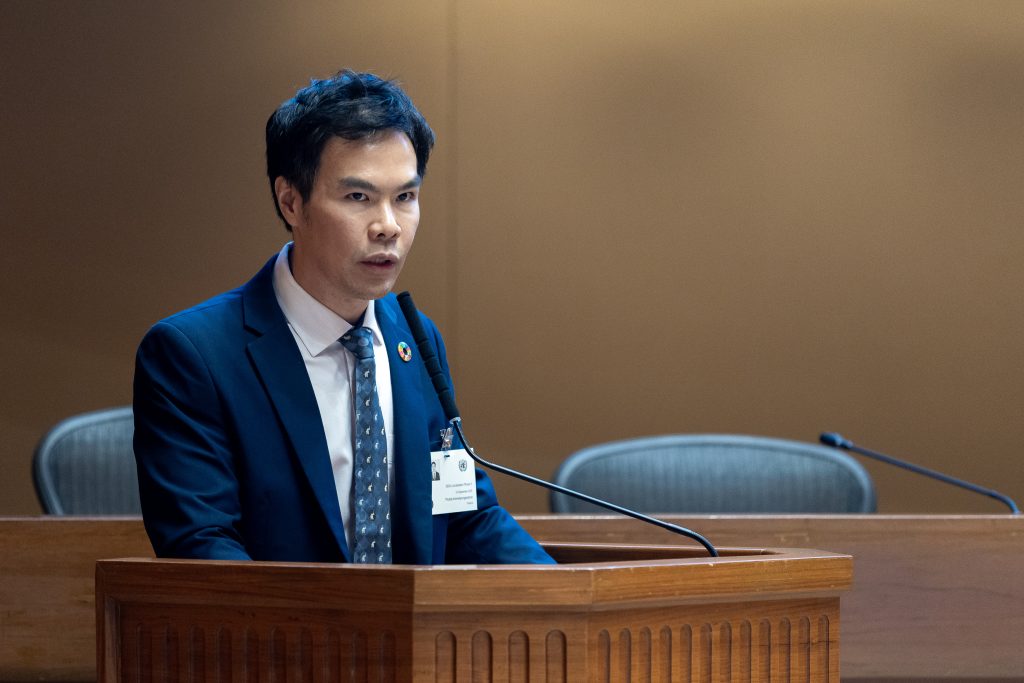


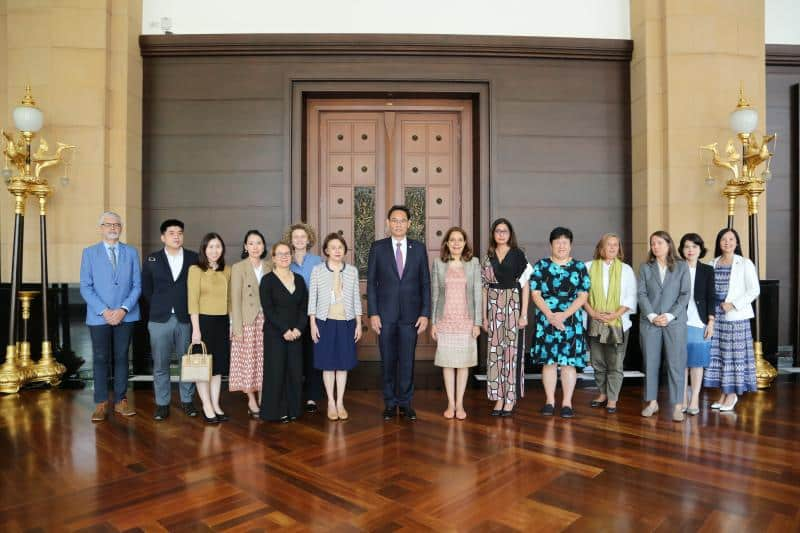
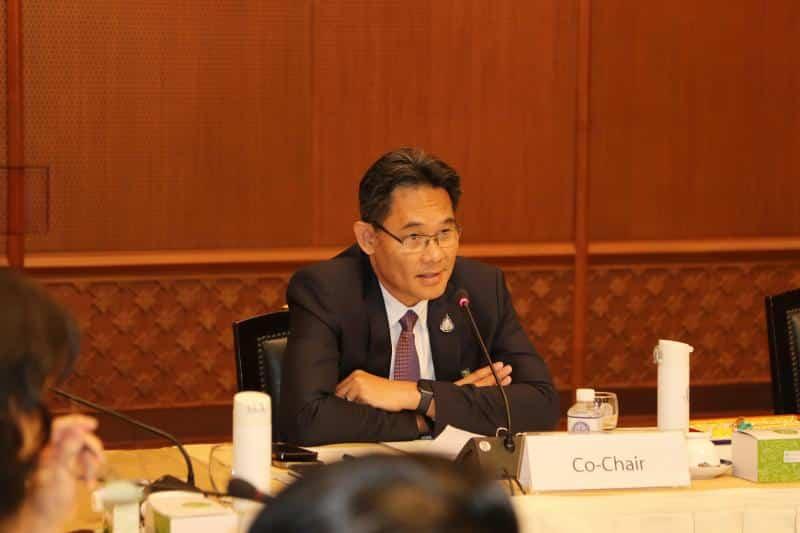
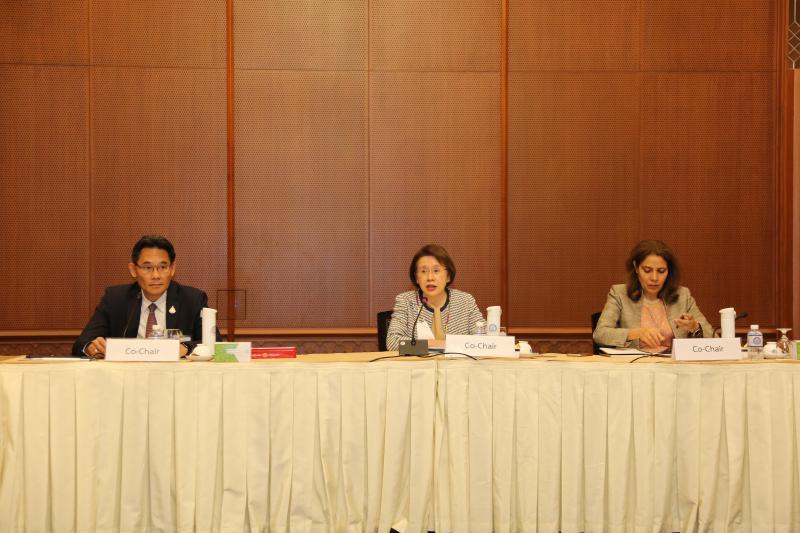
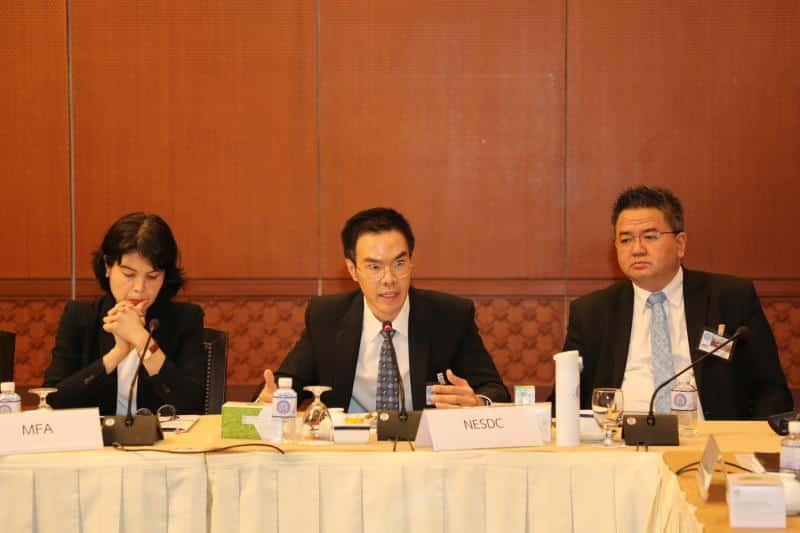
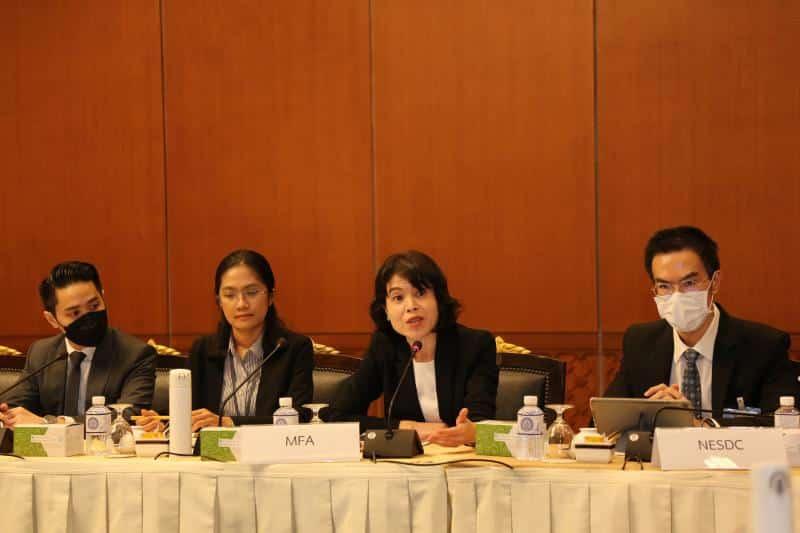
On May 26, 2023, Mr. Danucha Pichayanan, Secretary-General of the National Economic and Social Development Council, co-chaired with Ms. Eksiri Pintaruchi, Director-General of the Department of International Organizations, and Ms. Gita Sabharwal, United Nations Resident Coordinator for Thailand (UNRC), the Tripartite Steering Committee meeting to drive the implementation of the United Nations Sustainable Development Cooperation Framework (UNSDCF) for 2022-2026 at the Foreign Correspondents’ Club of Thailand, Ministry of Foreign Affairs
The UNSDCF framework represents cooperation between the Thai government and the United Nations that demonstrates the operations of the UN system according to the roles and mandates of each agency in supporting national development to achieve success under the 2030 Agenda for Sustainable Development by promoting the country’s transformation toward a high-value economy, human capital development, and reduction of carbon and greenhouse gas emissions through the utilization of digital technology and innovation for inclusive and sustainable growth that is environmentally friendly, which aligns with and supports Thailand’s national development objectives including the National Strategy, Master Plans under the National Strategy, the 13th National Economic and Social Development Plan, and the BCG economic policy
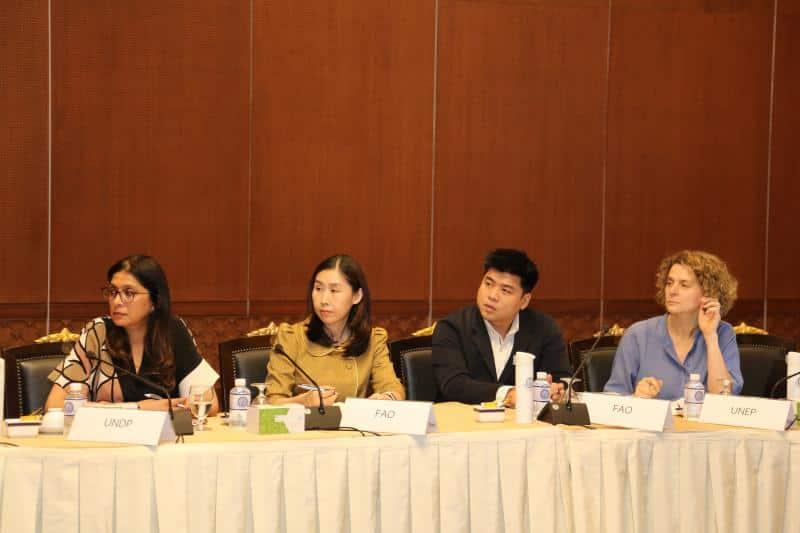
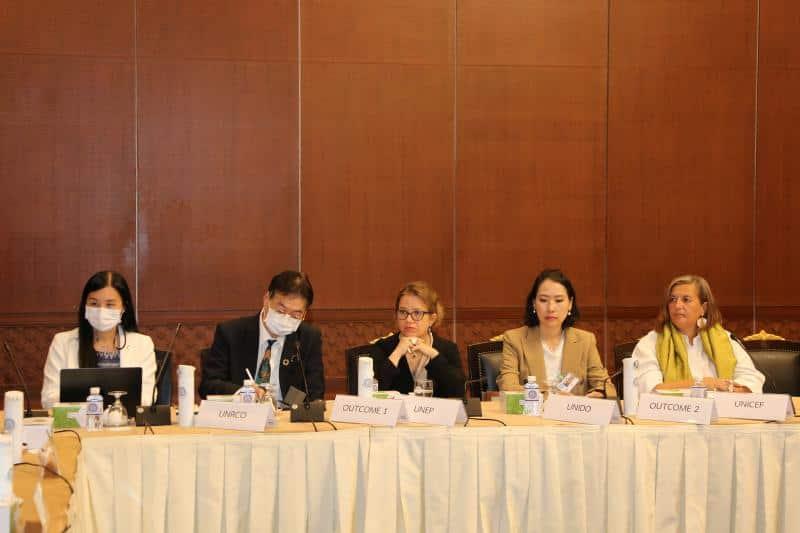
During the meeting, representatives of UN agencies in Thailand reported progress on UNSDCF implementation and exchanged views on approaches to drive the three outcomes of the cooperation framework, comprising: Outcome 1: Thailand’s transformation toward an inclusive economy based on green development with high crisis resilience and sustainability, with the United Nations Industrial Development Organization (UNIDO) and the United Nations Environment Programme (UNEP) as lead coordinators in promoting BCG-based economic growth, creating a low-carbon society, enhancing adaptive capacity and reducing disaster risks, which includes projects promoting sustainable forest conservation, carbon emission reduction, and plastic waste solutions; Outcome 2: Human capital development essential for social development where people benefit from inclusive development, with the United Nations Children’s Fund (UNICEF) together with the World Health Organization (WHO) and the International Telecommunication Union (ITU) as lead coordinators, emphasizing improving public access to services through digital technology, promoting lifelong learning, developing innovations to address health issues and reduce inequality, with examples of projects implemented jointly with NESDC such as the development of the Child Multidimensional Poverty Index (Child MPI); Outcome 3: People in Thailand can participate in and benefit from development without discrimination of any form, with the United Nations Development Programme (UNDP) and the International Organization for Migration (IOM) as lead coordinators, focusing on promoting an enabling environment for poverty alleviation, inequality reduction, human rights-based business conduct, and human trafficking prevention, including the implementation of the Thailand Policy Lab project and projects promoting the effective use of data for monitoring situations and formulating policies to address poverty
The implementation of these three strategic outcomes of the UNSDCF cooperation framework aligns with and supports Thailand’s national development framework, which NESDC and UN agencies in Thailand will jointly discuss approaches to scale up projects under the UNSDCF cooperation framework to drive development issues under the 13th National Development Plan at the local and sub-district levels, together with development network partners, to address problems in each area precisely, ensuring that people benefit from comprehensive and sustainable development, and that Thailand can achieve the Sustainable Development Goals (SDGs) by leaving no one behind
Related Documents