
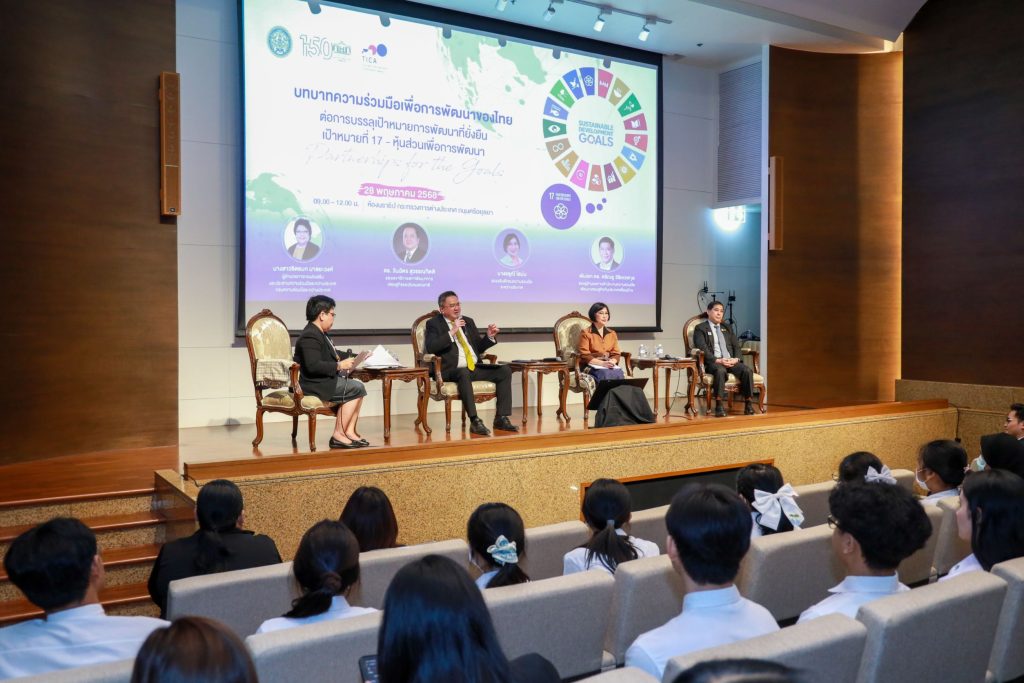
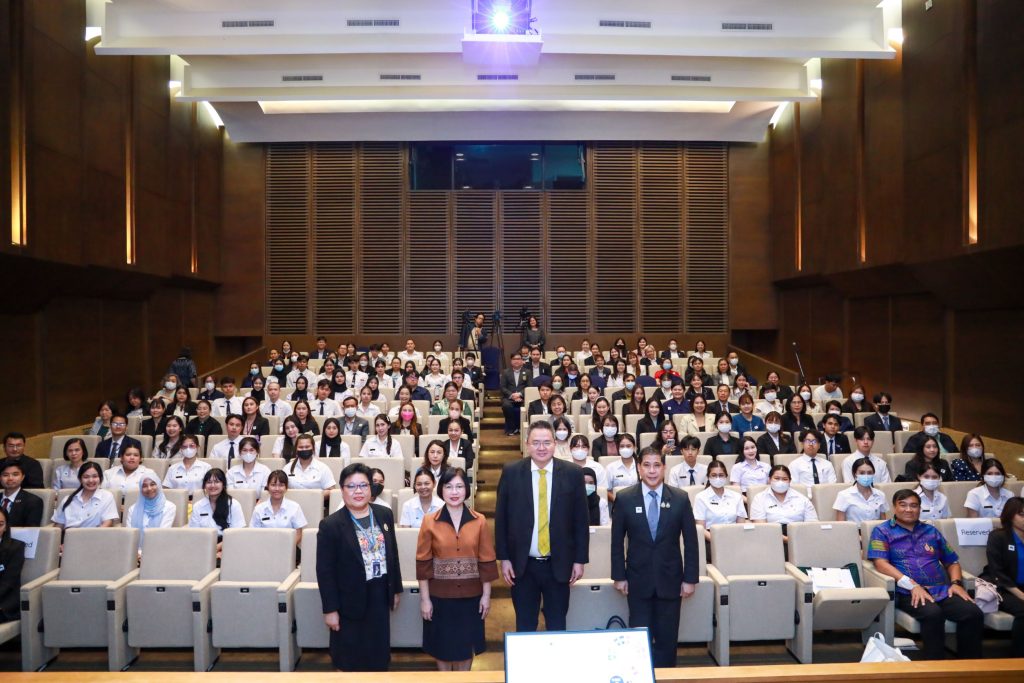
On May 28, 2025, the Ministry of Foreign Affairs organized an academic seminar on the occasion of the 150th anniversary of the establishment of the Ministry of Foreign Affairs under the theme “Thailand’s Role in Development Cooperation towards Achieving Sustainable Development Goal 17: Partnerships for the Goals” at the Narathip Room, Ministry of Foreign Affairs. The event featured Mr. Wanchat Suwannakitti, Deputy Secretary-General of the National Economic and Social Development Council, Ms. Arunee Haime, Deputy Director-General of the Department of International Cooperation, andColonel Dr. Saranyu Viriyavechakul Deputy Director of the Neighboring Countries Economic Development Cooperation Agency (Public Organization), who participated in discussions and exchanged views to extract lessons learned from Thailand’s role in development cooperation that will contribute to achieving the Sustainable Development Goals (SDGs)
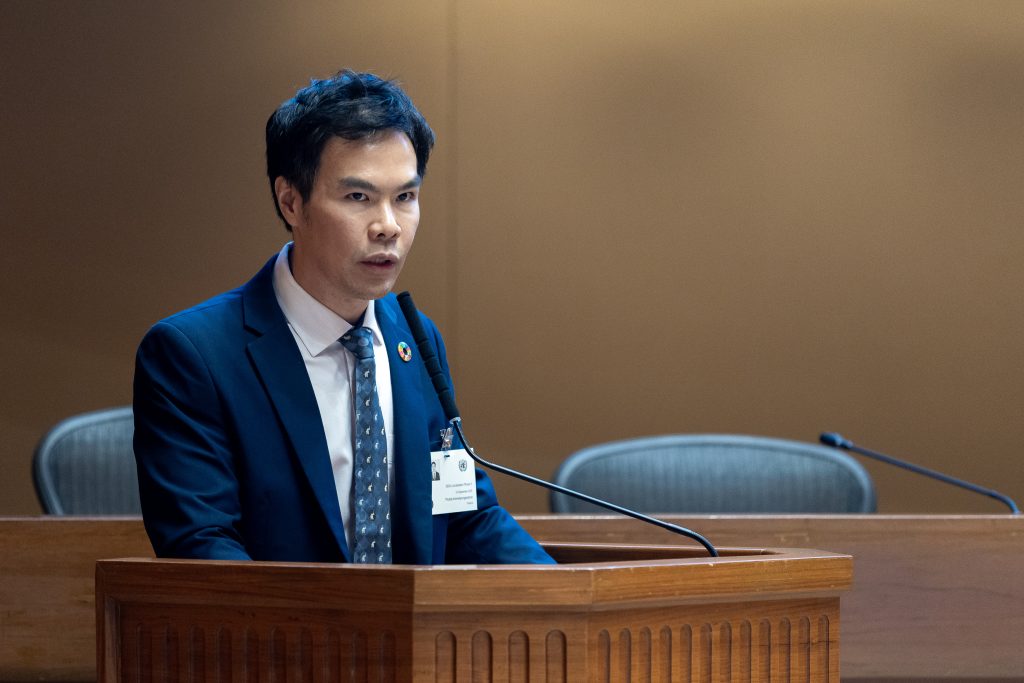
During the seminar, the Deputy Secretary-General delivered a presentation summarizing issues regarding NESDC’s role in driving SDGs as the secretariat of the Committee for Sustainable Development (CSD). In the past, Thailand’s SDG Roadmap has been developed, covering 6 areas: (1) awareness raising, (2) linking SDGs with the country’s 3-level plans, (3) sustainable development driving mechanisms, (4) implementation to achieve SDGs, (5) development partnerships, and (6) monitoring and evaluation of SDG implementation. This includes monitoring and evaluating the progress of SDG implementation through indicator data, which is one of NESDC’s important missions in driving SDGs. The assessment of SDG indicator data availability found that Thailand can collect data for 236 out of 248 SDG indicators, and this dataset has been displayed on Thailand’s SDGs Dashboard in February.
Finally, the Deputy Secretary-General emphasized the comprehensive and sustainable implementation to achieve SDGs, leaving no one behind, amid rapid economic, social, technological, and environmental changes. This requires effective international cooperation mechanisms and collaboration with development partners at all levels, including leveraging artificial intelligence (AI) to enhance data utilization for monitoring and evaluating SDG implementation. In the final 5 years of SDG implementation, the operational direction needs to accelerate: (1) integrating SDGs with national policies, (2) using technology and data to drive cooperation, (3) expanding the role of the private sector and civil society and systematic joint operations among various agencies, and (4) utilizing opportunities from the OECD membership process to upgrade development partnership standards. Additionally, the importance of youth participation in driving SDGs was emphasized.
********************

Strategy and International Cooperation Coordination Division
National Economic and Social Development Council
Related Documents