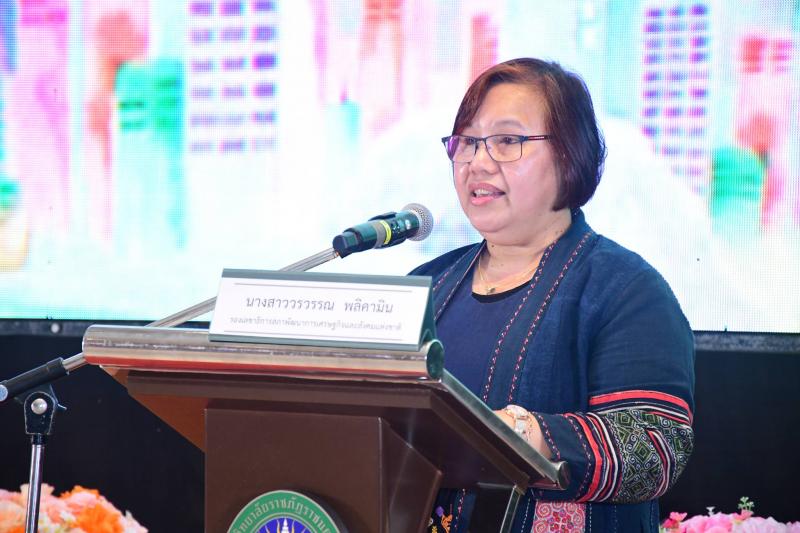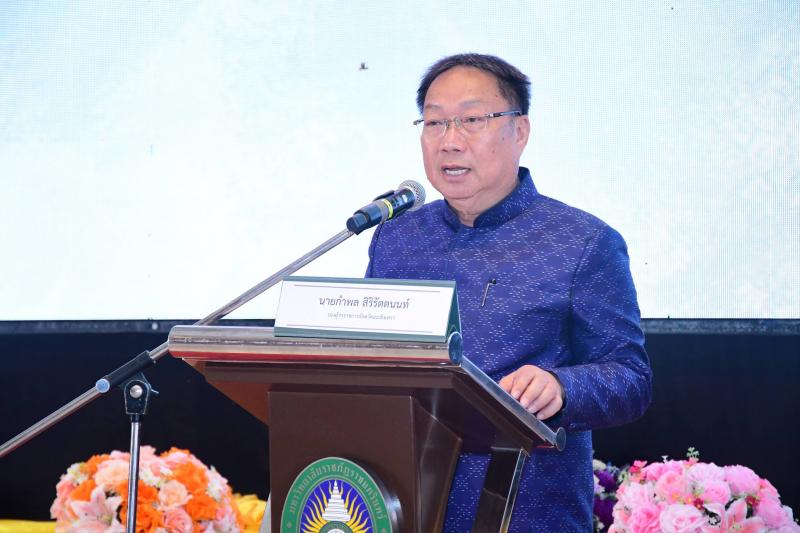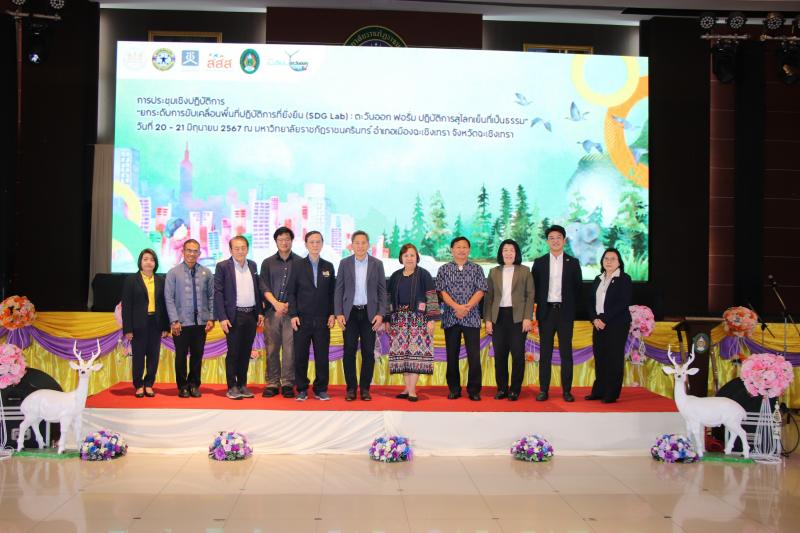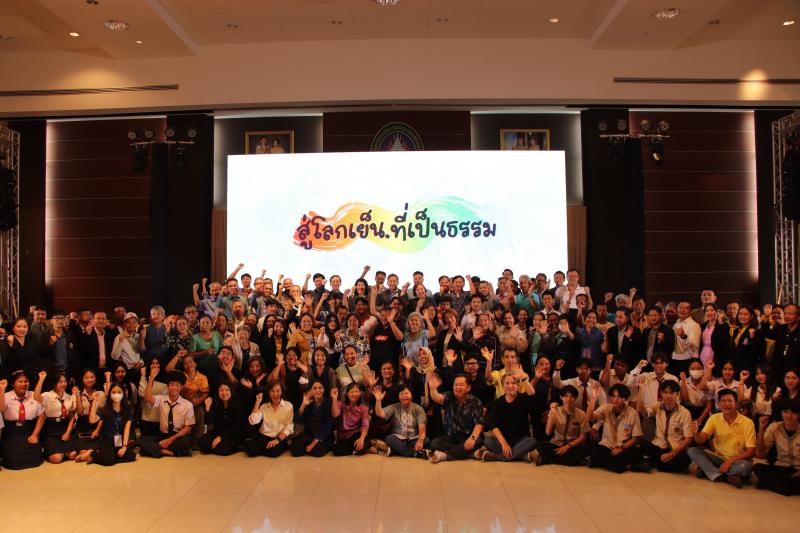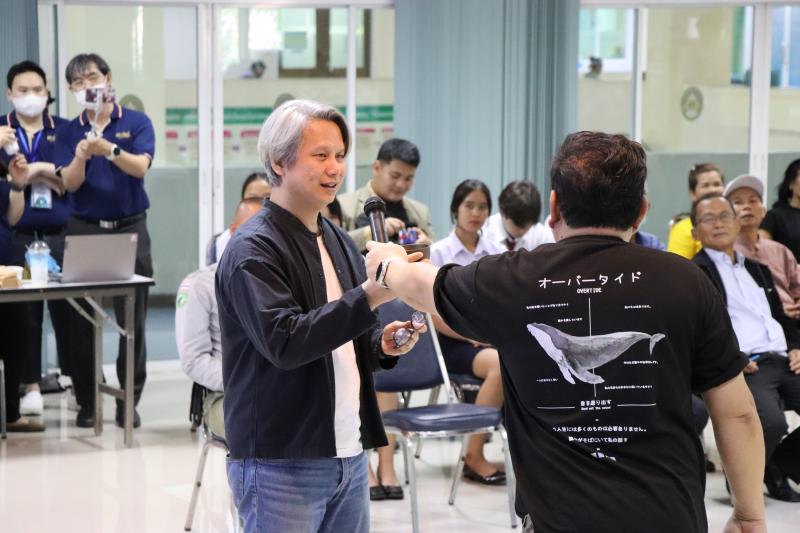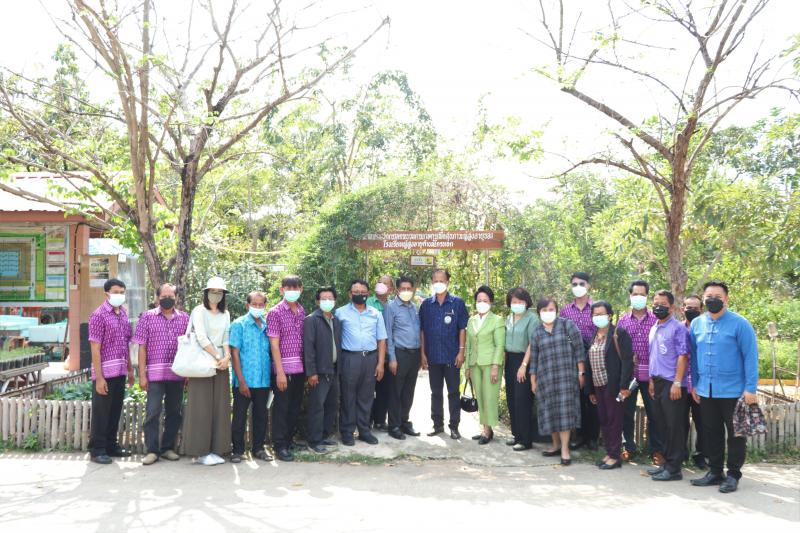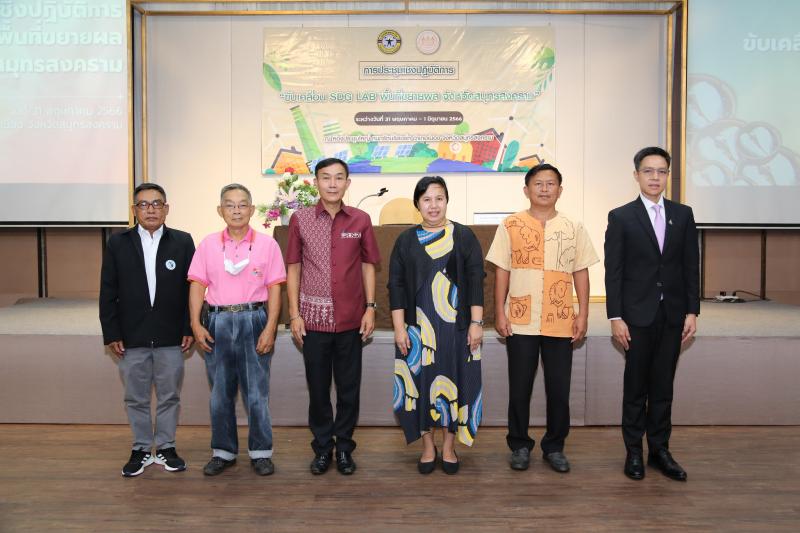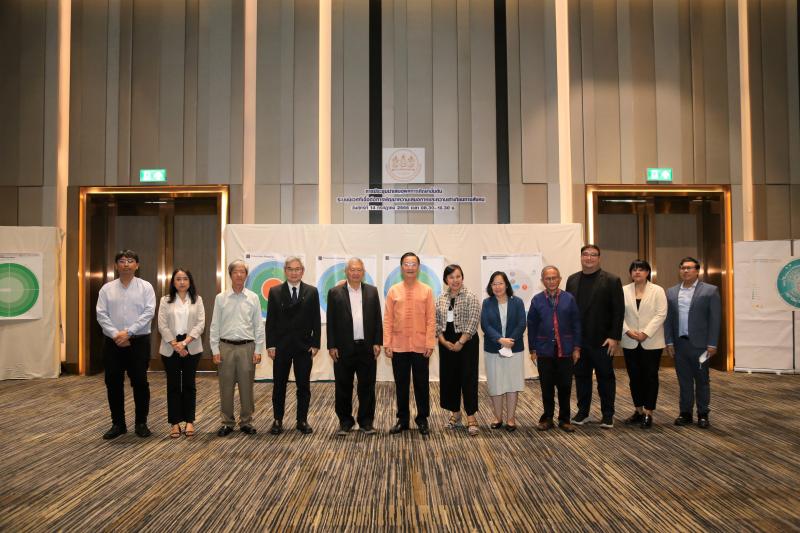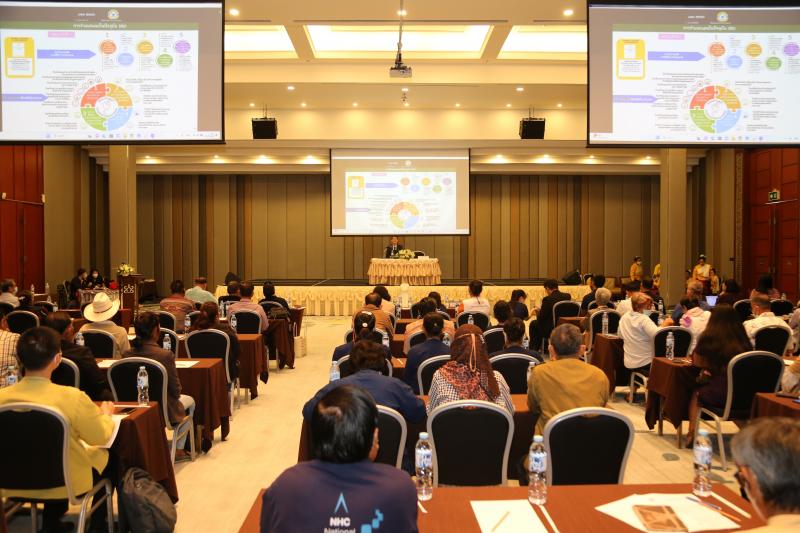
On June 21, 2024, the Office of the National Economic and Social Development Council (NESDC) collaborated with the Thailand Development Foundation (TDF), the Thai Health Promotion Foundation (ThaiHealth), the National Health Commission Office (NHCO), Rajabhat Rajanagarindra University, Brain Bank volunteers, and Eastern region network partners to organize a workshop on “Enhancing the Implementation of Sustainable Development Goal Laboratories (SDG LAB): Eastern Forum – Action Towards a Just Cool World” at Rajabhat Rajanagarindra University, Chachoengsao Province. The workshop aimed to support collaborative efforts in implementing SDG LAB in the Eastern region and enhance actions towards sustainable development goals that will lead to creating an equitable society of opportunities to address the impacts of climate change. Ms. Worawarn Plikamin, Deputy Secretary-General of the National Economic and Social Development Council served as the opening ceremony chairperson, and the Office was honored to have Mr. Kampol Sirirattanont, Deputy Governor of Chachoengsao Province and Associate Professor Dr. Duangporn Phupaka, President of Rajabhat Rajanagarindra University deliver welcome remarks. The meeting had approximately 200 participants, including Brain Bank volunteers, development network partners, representatives from government agencies, local administrative organizations, academic institutions, private sector, civil society, practitioner communities, and youth groups.
This meeting featured a joint declaration of intent to become development partners for creating a just cool world, with partners from multiple sectors totaling 20 organizations, comprising: (1) Government sector, including NESDC, NHCO, Community Organizations Development Institute (Public Organization), and Regional Environmental Office 13; (2) Social enterprises, including Saeng Suree Social Enterprise and Rayong Urban Development; (3) Civil society, including TDF, Eastern Friends Network, and the Coordinating Committee of Non-Governmental Development Organizations (Eastern Region); and (4) Education sector, including Rajabhat Rajanagarindra University. The Eastern Declaration 2024 Towards a Just Cool World was proclaimed, stating: “Human rights are being violated, forced to endure the climate crisis that severely impacts health, economic damage, and life security. Eastern civil society partners must preserve the human rights of all people with firm determination to intensify our response to this crisis. We will mobilize wisdom and unite forces to jointly reduce problems at their source and create adaptive approaches to mitigate the severity of downstream impacts. We will transform the hot world into a just cool world to preserve the equal right to existence of all species with transparency and sincerity towards each other, for equitable justice for all sectors.”
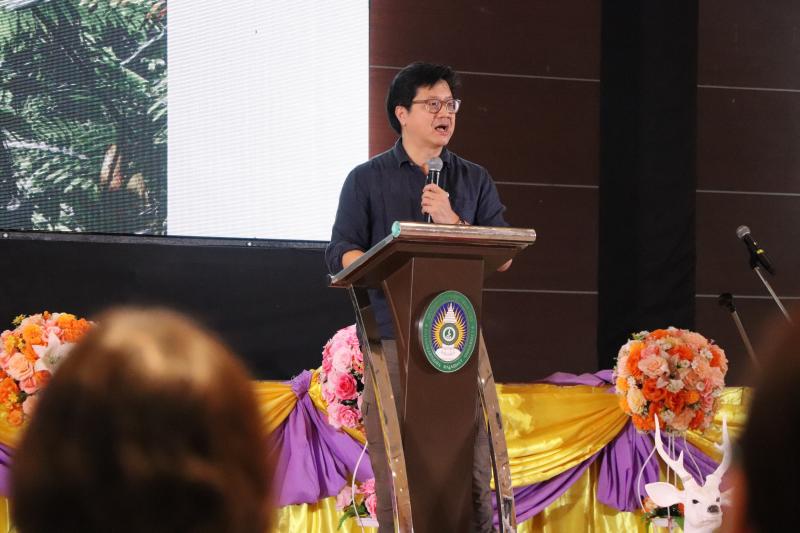
Additionally, there was a special lecture forum on “Action Towards a Just Cool World” by distinguished speakers, including: (1) Associate Professor Dr. Seri Suparatit, Expert of the Intergovernmental Panel on Climate Change, who highlighted how the Eastern region has become a vulnerable area that must cope with climate change crises, particularly flooding and drought conditions that severely impact the industrial and agricultural sectors. Therefore, the Eastern region should use nature-based solutions, such as promoting forest areas and avoiding the use of exotic plants to preserve biodiversity, and designing areas consistent with ecosystems to prevent flooding; (2) Dr. Kannikar Thammapanichawong, Head of Research Group, Puey Ungphakorn Institute for Economic Research, who explained climate change impacts on the economy across agricultural sectors, resulting in higher agricultural product prices due to increased costs, industrial sectors facing water shortages for production processes and increased production costs from electricity bills, and tourism sectors experiencing reduced tourists due to climate variability. Therefore, urgent action is needed, including transition to low carbon, reducing greenhouse gas emissions in industrial and agricultural sectors, and promoting climate change adaptation to strengthen businesses and enable continuous economic activities; (3) Associate Professor Dr. Pun Thienburanathum, Deputy Director for Organizational Planning and Strategy, Area-Based Development Fund Management Unit, who discussed research on “Developing Livable Low-Carbon Cities” conducted in pilot areas such as Saraburi and Rayong provinces, analyzing factors/components of cities that create both opportunities and risks for development. The Eastern region has significant implications as an area of high opportunities and risks, including diverse transportation/connectivity systems, employment opportunities from target industry development (S-Curve), and knowledge sets and cooperation from local people, as well as risks from natural resources beginning to face problems, requiring urgent urban planning and management to accommodate climate change impacts; (4) Dr. Butra Boonliang, Head of ESG Strategy and New Initiatives, SCG Chemicals Public Company Limited, who presented the use of ESG concepts in SCG’s business operations, emphasizing business practices that consider responsibility in three main areas: Environment, Social, and Governance, including conducting business with green innovation such as producing products that reduce carbon dioxide emissions, using environmentally friendly components and reusable packaging to adapt and prepare for current and future climate change.
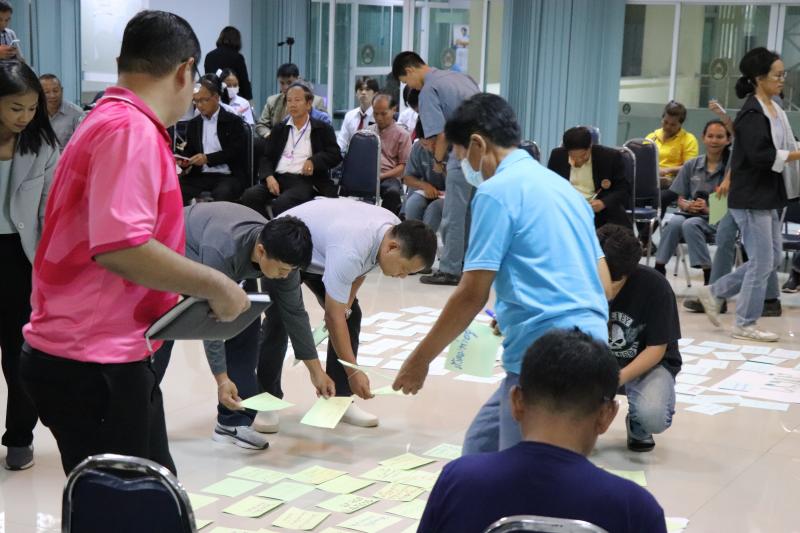
The mobilization of Eastern region network partners’ intent in this instance went through an exchange of ideas process to enhance the implementation of Sustainable Development Goal Laboratories (SDG LAB) through: (1) Forest and surrounding forest areas will promote knowledge creation by building values, attitudes, and skills for community members and youth in making forests areas that produce oxygen and absorb carbon dioxide; (2) Watershed areas will develop community-based water management innovation and jointly establish MOUs to define agreements for community water management; (3) Agricultural areas will focus on new agricultural approaches using innovation/technology and integrated farming; (4) Industrial areas will collaborate on local/community research, such as environmentally friendly coastal fisheries, developing industrial areas alongside agricultural and tourism development; (5) Marine and coastal areas will expand community networks for Eastern coastal conservation; (6) Urgent issues regarding Eastern wild elephants will collaborate with government agencies to address immediate problems and create social awareness about wild elephant issues.
Following the meeting, Eastern development partners will jointly develop strategies for implementing “Eastern Region Towards a Just Cool World” by focusing on developing change leaders with strategic thinking and project management skills, as well as promoting the development direction of the Eastern region from the local level to the policy level. NESDC will serve as a facilitator for implementation by providing data and knowledge support, as well as coordinating with external partner agencies to ensure concrete implementation results.
News: Social Equity and Equality Development Strategy Division
Photo: Division of Social Equity and Equality Development Strategy/Rajabhat Rajanagarindra University