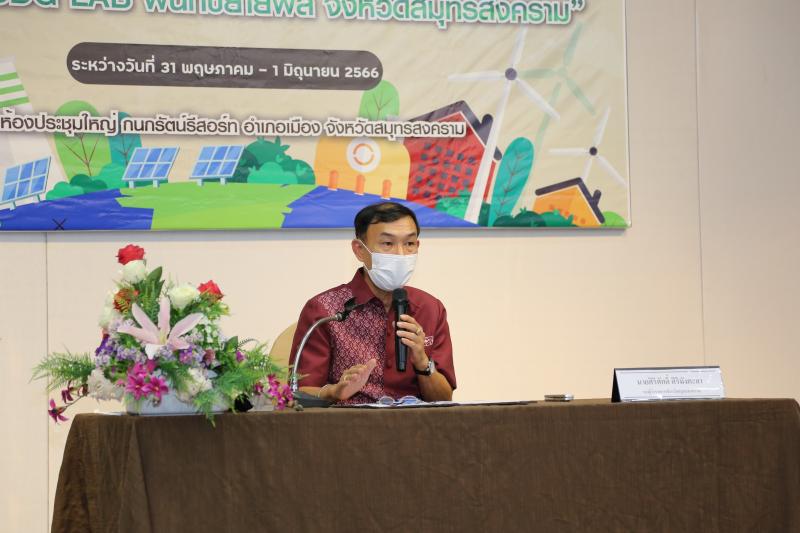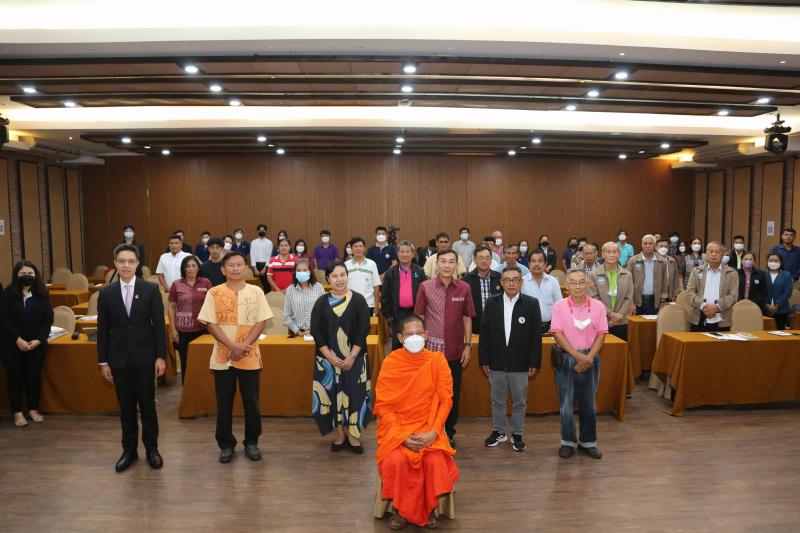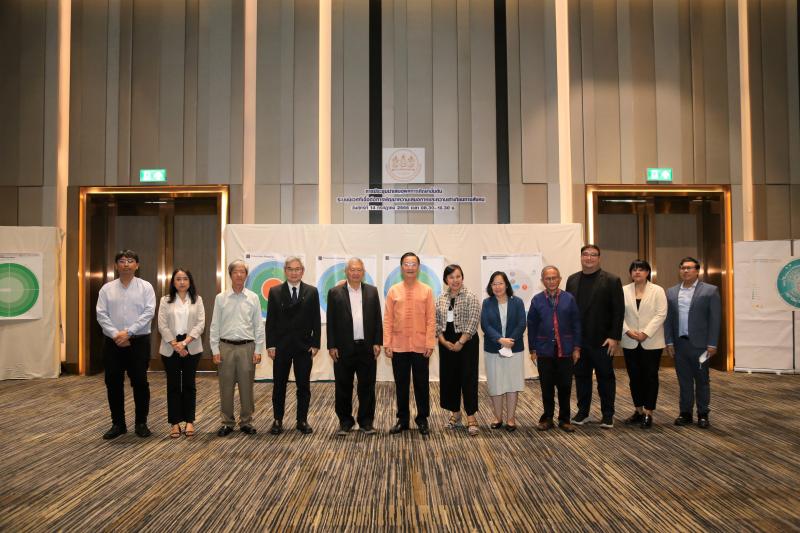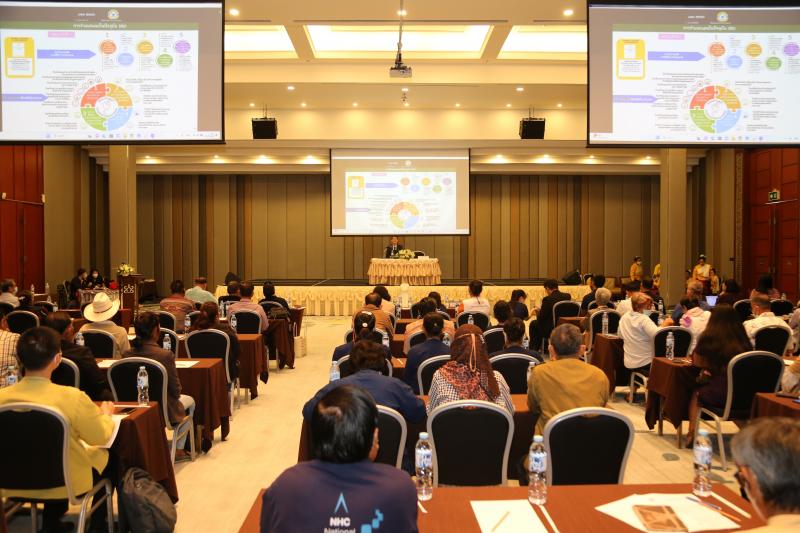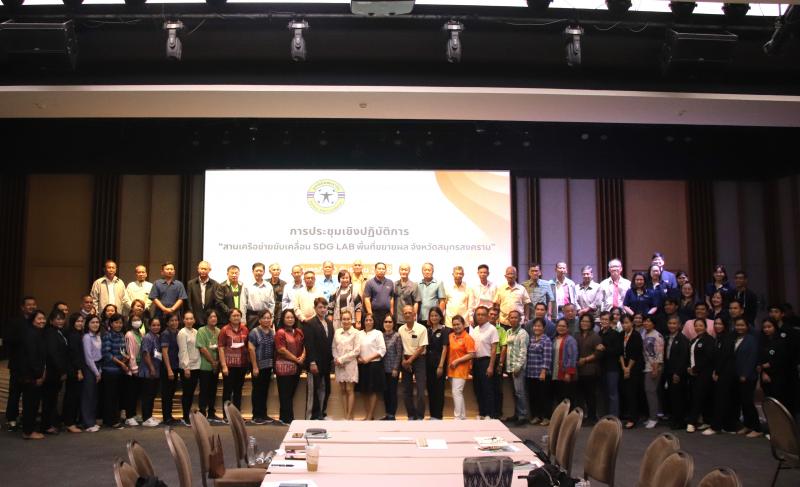
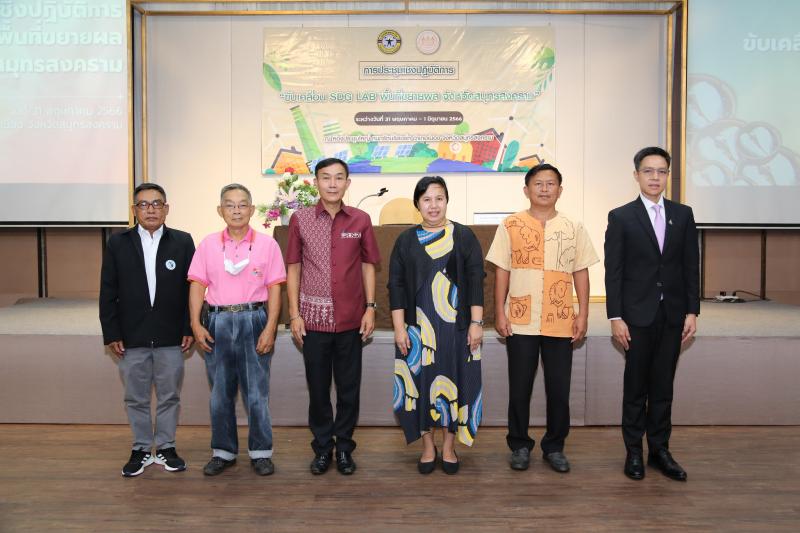
On May 31 – June 1, 2023, the Social Equity and Equality Development Strategy Division, Office of the National Economic and Social Development Council, organized a workshop on “SDG LAB Implementation in Samut Songkhram Province Expansion Area” at Kanokrat Resort, Mueang Samut Songkhram District, Samut Songkhram Province, to expand the SDG LAB implementation area with Brain Bank volunteers as an integrated mechanism for driving development in the area. The meeting was chaired by Ms. Worawan Plikamin, Deputy Secretary-General of the National Economic and Social Development Council, and the Office was honored to have Mr. Sirisak Sirimangkala, Deputy Governor of Samut Songkhram Province deliver welcoming remarks. The meeting had approximately 80 participants, including Brain Bank volunteers, development network partners, representatives from government agencies, local administrative organizations, private sector, and civil society.
The first day’s activities included a lecture on “National Development Strategy and Sustainable Development Agenda” by Mr. Wichpipol Tiwatansagul, Director of the Social Equity and Equality Development Strategy Division, Acting Advisor on Policy and Planning, who discussed Thailand’s national development with the 20-Year National Strategy (2018-2037) as the long-term national development goal translated into the Master Plan under the National Strategy (Revised Edition) (2023-2027), which has entered the second phase of implementation, and the 13th National Economic and Social Development Plan (2023-2027), which has area-level mechanisms linking the 13th Development Plan with other development plans in the area (One Plan), emphasizing integrated implementation with sub-district level networks connecting the work of all sectors, including presenting the goals and development approaches for the Central Region (2023-2027) aimed at becoming a “high-value goods and services production base,” which includes the development of the Central-Western Special Economic Corridor as an important development issue. It can be said that Thailand’s development strategy is consistent with the Sustainable Development Goals, which aim to achieve balanced and sustainable development in all dimensions, with local communities playing an important role in jointly driving from local planning, implementation, monitoring and evaluation, and participating in developing data and sustainable development indices that correspond to the area’s context.
This was followed by a learning forum on examples of sustainable area development implementation through SDG LAB Eastern Region, which is a pilot area for implementation and expansion to the regional level in 8 provinces in the Eastern Region, by connecting and coordinating the work of Brain Bank volunteers with various sectors at the area level, provincial level, and linking work at the regional level to achieve the goal of driving “Sustainable Eastern Region.” The panel included Mr. Jesada Mingsamon, Chairman of Brain Bank Volunteers, Chachoengsao Province, Mr. Kanchit Khemchalerm, Board Member of the Thai Development Foundation and Coordinator of the Sustainable Eastern Network, Mr. Sutthitham Lekhwiwat, Chairman of Brain Bank Volunteers, Rayong Province and Chairman of the National Health Assembly, Rayong Province, as panelists, with Mr. Kunanont Boonjaeng, Policy and Action Plan Analyst, NESDC, as moderator. At the end of the activity, a forum was opened for questions and exchange of opinions on approaches to driving SDG LAB from the Eastern Region to Mae Klong City, with Assistant Professor Jamnong Raekpinit, Rector of the Institute of Learning for All (University of Life), as moderator.
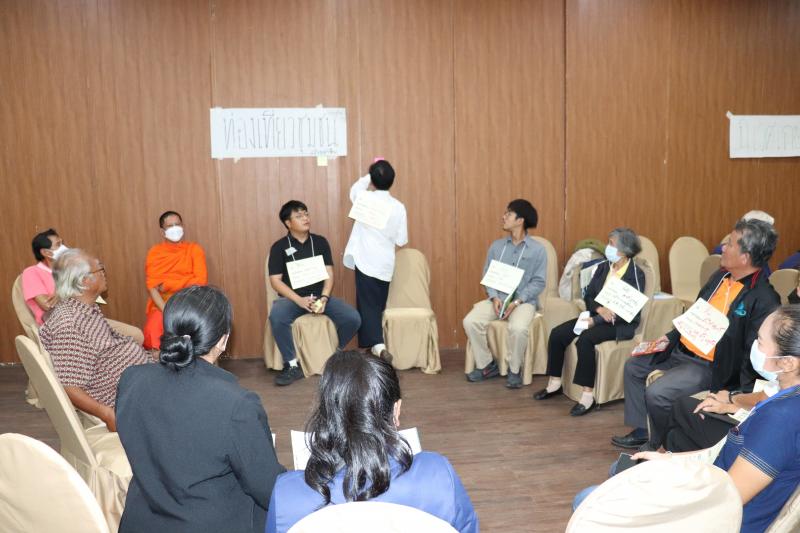
The second day’s activities involved brainstorming, discussing, exchanging opinions, and finding approaches for working to drive SDG LAB Samut Songkhram Province, with Team Yangthon as the process facilitation team together with NESDC, which resulted in joint development issues and 5 implementation approaches as follows: (1) Promoting cultural tourism by emphasizing creating value from valuable community assets, such as developing faith-based tourism plans (Sai Mu) along temple and religious site routes, creating pilot areas for development as cultural tourism destinations, with educational institutions as hosts, to find an overall picture based on ecosystems and community needs (2) Creating local learning ecosystems starting with grouping workers and educational networks to jointly develop local learning ecosystem data that is “education and learning for life development,” with knowledge management that leads to extending knowledge to actual practice throughout all ages, with the University of Life as a data repository, knowledge repository, and central hub connecting work in the area (3) Community-based elderly care implementing the “Wessuwanna Safe and Secure Mae Klong Project” with local administrative organizations as the main responsible party and central coordination center for the project, between elderly/bedridden elderly patients, hospitals, and the Sanprarachaen Foundation (fundraising supporter), with integrated collaboration and expansion from sub-district to provincial level (4) Creating balance for agricultural ecosystems starting with managing industrial sectors that impact agricultural livelihoods, organizing participatory public deliberation forums, and promoting the role of civil society in jointly pushing for policy changes in the province (5) Developing quality of life and community welfare by creating consultation spaces between “caring people” and partner agencies to solve problems, exchange ideas, and transfer local wisdom, developing databases and the “Mae Klong Jobs” application to search and match young people with local job sources, developing and adding value to traditional community products using wisdom combined with business knowledge, promoting career creation and income from cultural bases, such as reviving boat wedding traditions, shrimp fishing, and community cooperation, as well as developing model groups/community organizations at the sub-district level, such as savings groups for production, community welfare funds, cooperatives, community enterprises/social enterprises, to serve as mechanisms for creating participation and distributing benefits from community economic development to all groups, especially the elderly, disabled, and vulnerable groups in the area
This meeting marks the beginning of SDG LAB implementation in Samut Songkhram Province, bringing together networks from all sectors including government agencies, local administrative organizations, private sector, civil society, and educational institutions in the area. NESDC will support the implementation by providing knowledge support, coordinating external partner agencies, and jointly monitoring and providing recommendations for SDG LAB implementation in Samut Songkhram Province, with Brain Bank volunteers serving as the connecting mechanism for future work.
News: Social Equity and Equality Development Strategy Division
Photos: Chakrapong Swaphapmongkol and Social Equity and Equality Development Strategy Division