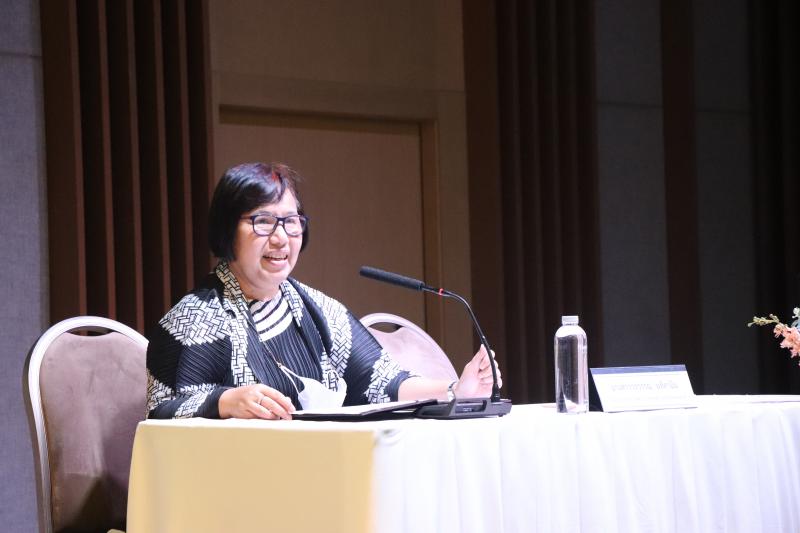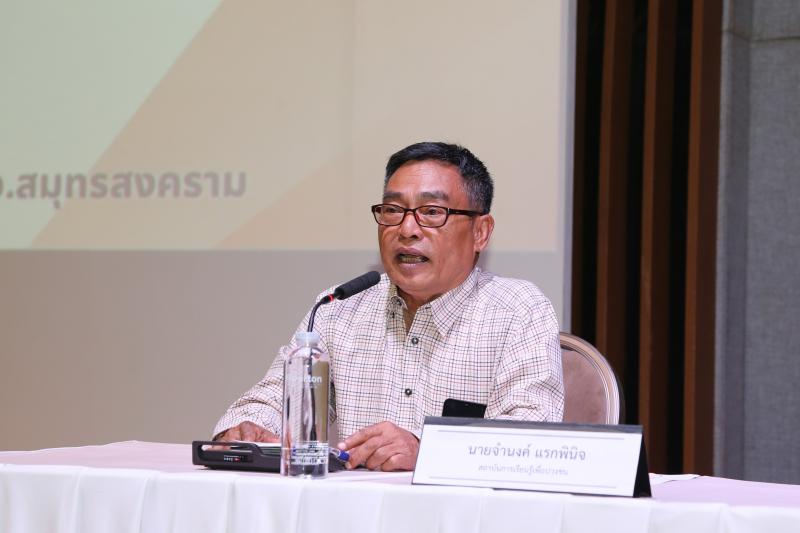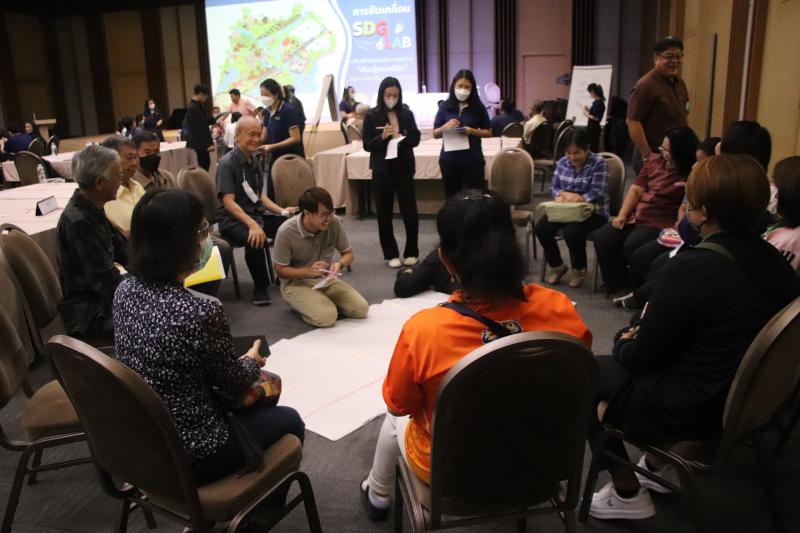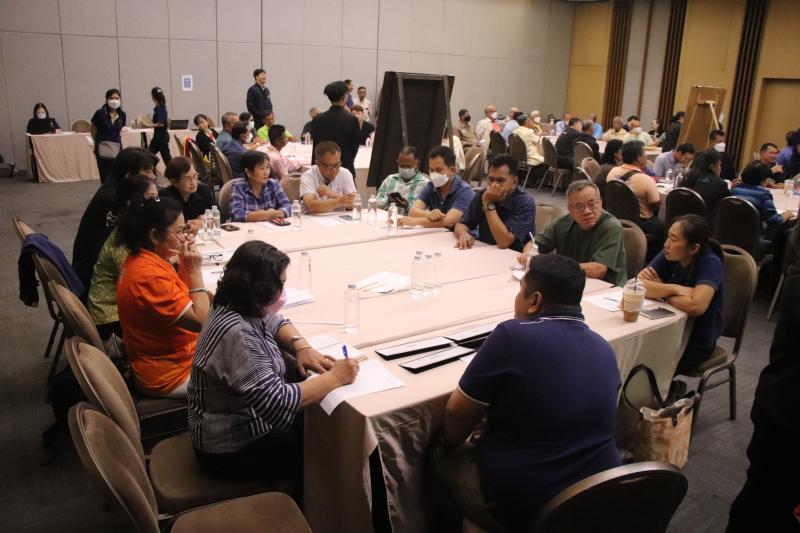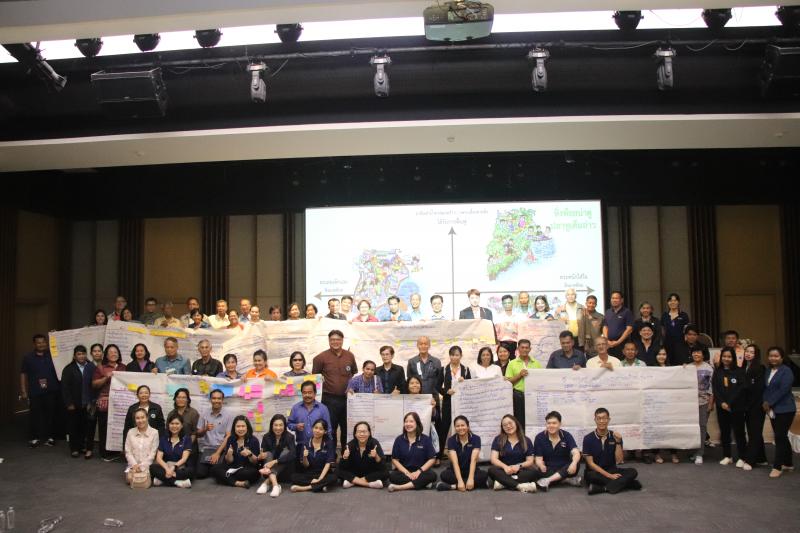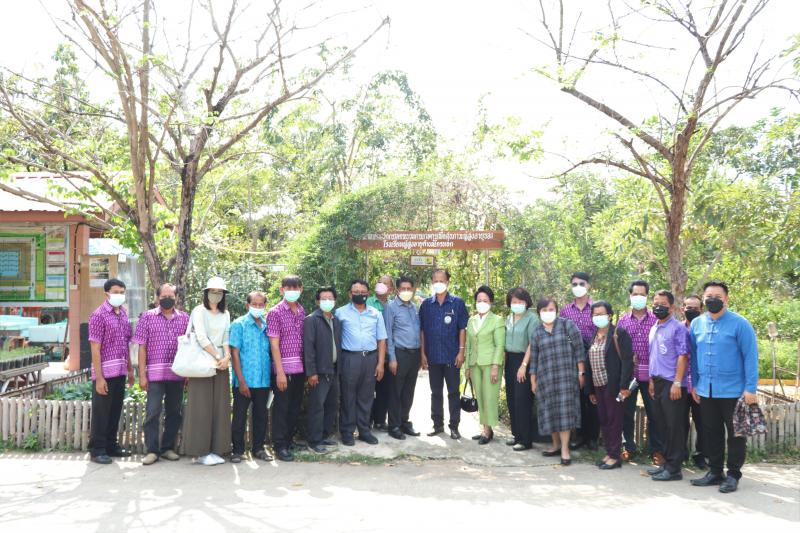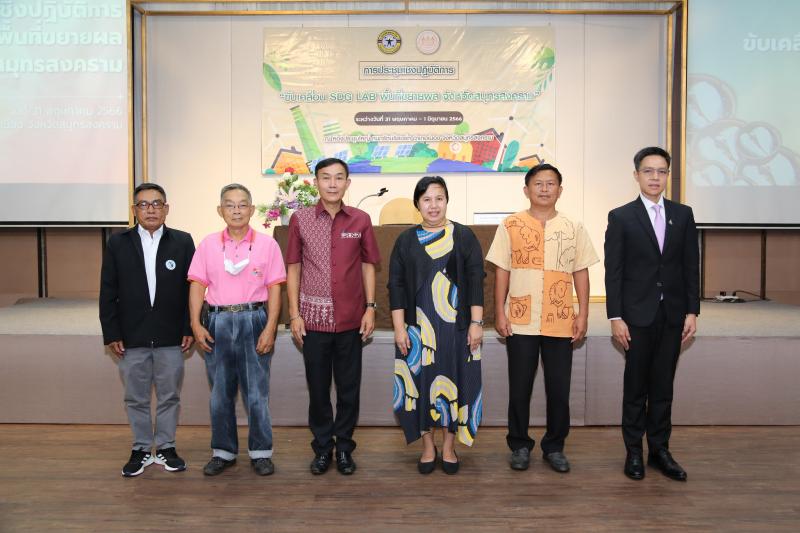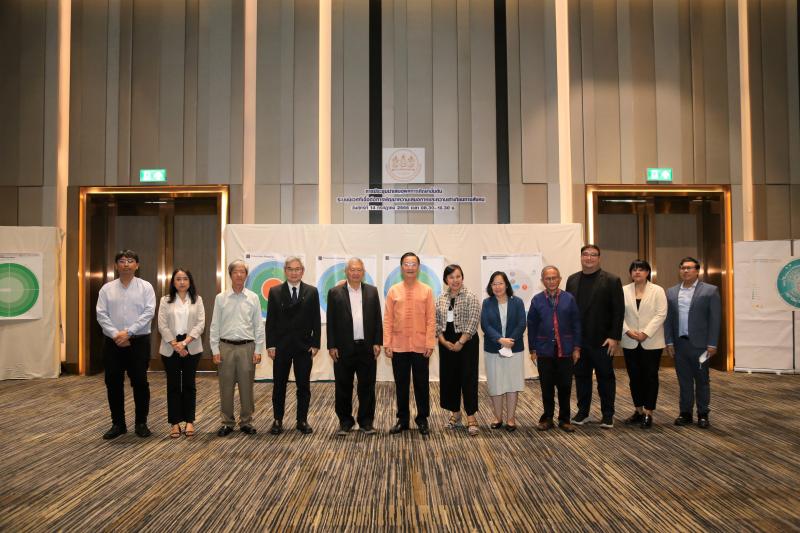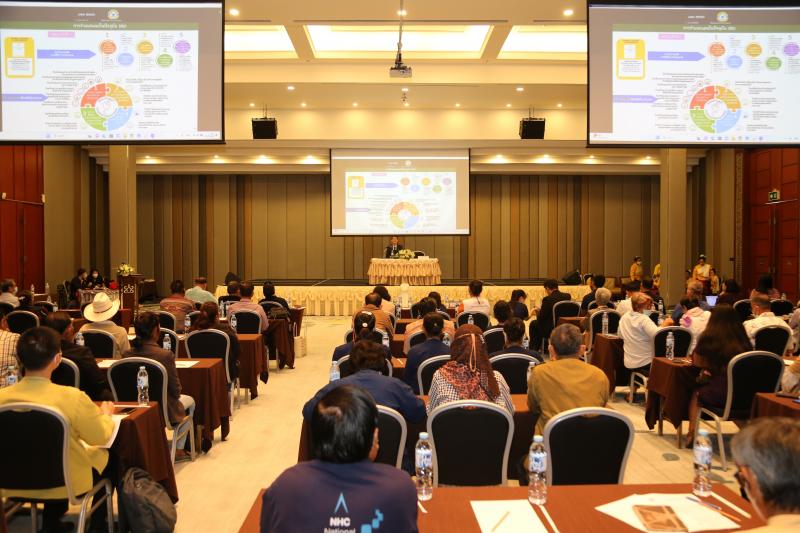
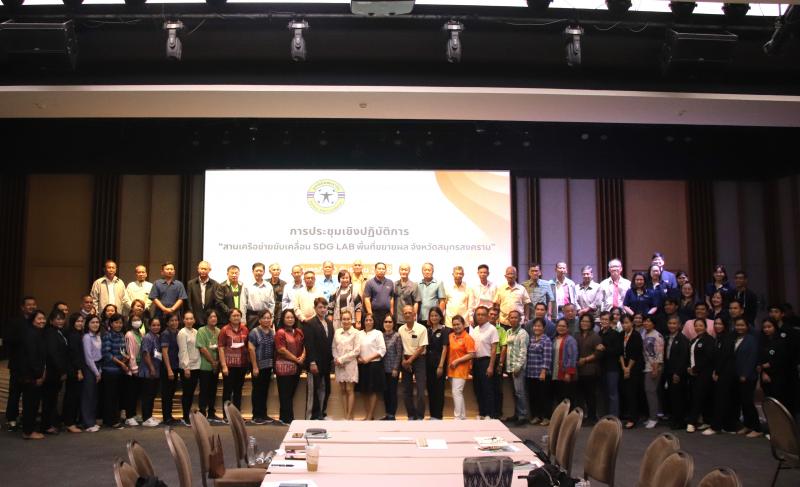
On September 20, 2023, the Strategy Division for Social Equity and Equality Development, Office of the National Economic and Social Development Council (NESDC), in collaboration with the Pattana Thai Foundation (PTF), organized a workshop “Strengthening the SDG LAB Network in Samut Songkhram Province” at Riverton Hotel Amphawa, Mueang Samut Songkhram District, Samut Songkhram Province. The objective was to further develop and strengthen the SDG LAB network in Samut Songkhram Province and jointly discuss integrated approaches for driving work across various sectors to connect as an ecosystem network that supports the sustainable implementation of SDG LAB in Samut Songkhram Province. Ms. Worawarn Plikamin, Deputy Secretary-General of the National Economic and Social Development Council served as the opening chairperson, and the Office was honored to have Assoc. Prof. Dr. Jamnong Rakpinit, Acting President of the Institute of Learning for All (University of Life), join in delivering welcome remarks. The meeting had approximately 120 participants, comprising brain bank volunteers, development network partners, representatives from government agencies, local administrative organizations, private sector, and civil society.
The objective of the meeting was to facilitate knowledge exchange and opinion gathering processes to determine the future vision and approaches for driving SDG LAB in Samut Songkhram Province, and to create cooperation and resource integration among development partners in driving local initiatives. Faculty members from the University of Life and staff from Sangsarn Panya Company served as process facilitators alongside NESDC.
Summary of the opinion gathering results on approaches for driving SDG LAB in Samut Songkhram Province is as follows:
(1) Creating a local learning ecosystem faces challenges including generational gaps and different life perspectives, and the role of educational institutions in the area. Proposals include establishing a learning system based on local resources, fostering local conservation awareness, and developing a local information system to support the development of local curriculum frameworks that align with current contexts, while emphasizing life skills education. This requires a working committee to drive initiatives in the form of an education assembly, awareness creation, and concrete action plan development.
(2) Creating balance in agricultural ecosystems Currently, farmers face impacts from industrial factories and housing development businesses encroaching on agricultural areas, resulting in changes to lifestyles and ecosystems. However, development has led to the use of technology to enhance agricultural productivity and connect the agricultural sector with tourism. Proposals include using technology to link data for future agriculture, achieving “doing less, getting more,” using environmental protection and management technology to create agricultural standards, and promoting new generation farmers.
(3) Developing quality of life and community welfare Proposed approaches include attracting young people back to create careers and generate income in the area, promoting the collection and storage of local resource data for young people to build upon, and developing welfare from natural resources, particularly growing pesticide-free vegetables that help reduce expenses and create good health, as well as strengthening community welfare and creating elderly care systems in communities.
(4) Community-based elderly care From having support systems for elderly care by neighbors and communities to mutual support systems in society, with driving goals focused on good health and well-being, including creating knowledge for adapting to technology, promoting elderly economy through career creation, creating holistic health (physical, mental, social), promoting safe food, managing new epidemic diseases, services for vulnerable groups, creating welfare especially long-term care and savings, and creating appropriate environmental conditions.
(5) Promoting cultural tourism by promoting Mae Klong lifestyle tourism in the three-river city, preserving and passing on the heritage of waterways to future generations, using local knowledge and wisdom to develop and connect lifestyles and culture as tourism resources.
This meeting served to strengthen the SDG LAB network in Samut Songkhram Province, building upon the Kick Off forum for driving SDG LAB in the expansion area of Samut Songkhram Province, which brought together networks from all sectors. NESDC will serve as a support mechanism for driving the work, including providing knowledge support, coordinating with external partner agencies, and jointly monitoring and providing recommendations for driving SDG LAB in Samut Songkhram Province, with brain bank volunteers serving as the connecting mechanism for future work.
News: Social Equity and Equality Development Strategy Division
Photo: Jakkrapong Sawaphapmongkol and the Strategy Division for Social Equity and Equality Development