



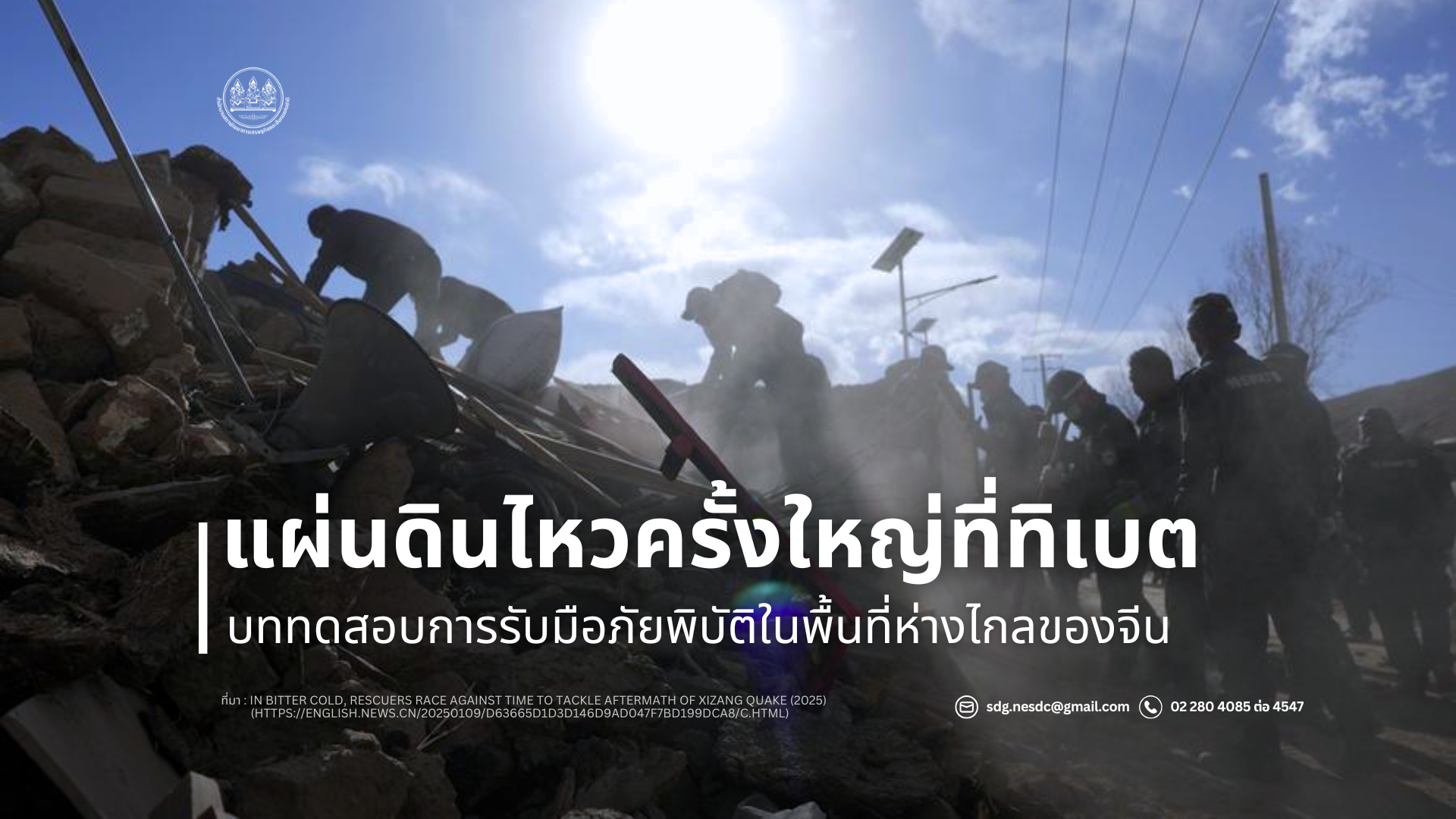
The 6.8-magnitude earthquake in China’s Tibet Autonomous Region on January 7, 2025, not only caused massive losses but also served as a crucial test of China’s disaster response capabilities in remote areas.
Geographical Challenges With an average altitude of 4,500 meters above sea level, the affected area presents significant challenges for rescue operations, including harsh cold weather, thin air, and difficult access, particularly in the 27 villages within a 20-kilometer radius of the epicenter. As of January 9, 2025, the death toll reached 126 people, with 188 injured and over 3,600 houses destroyed, reflecting the severity of this disaster. The Chinese government mobilized over 14,600 rescue personnel and established 3,705 temporary shelters to accommodate over 46,500 disaster victims, demonstrating preparedness in responding to this disaster.
Leadership and Crisis Management by the Chinese Government The rapid response to the disaster and appropriate resource allocation helped reduce losses and alleviate the suffering of people in the affected areas. President Xi Jinping ordered all-out rescue efforts to save lives and minimize casualties, emphasizing search and rescue operations for those trapped under debris and treatment of the injured. Premier Li Qiang ordered rapid assessment of the situation and casualty count, emphasizing the provision of shelter and food for disaster victims. Additionally, Vice Premier Zhang Guoqing traveled to the affected area to oversee relief and assistance efforts, focusing on preventing secondary disasters and restoring infrastructure.
Relief and Assistance Plans Resources were mobilized in both financial and personnel aspects, with 80 million yuan allocated for agricultural recovery. This action not only provides short-term relief but also lays the foundation for long-term economic recovery. Comprehensive healthcare was provided through the establishment of 26 medical teams with 581 medical personnel and 107 ambulances to prepare for emergency situations, treat the injured, and care for disaster victims’ health. Temporary shelters were arranged along with essential supplies such as blankets, folding beds, winter clothing, and food.
Post-Disaster Recovery Infrastructure restoration involved expediting repairs to critical transportation routes while restoring telecommunications and electricity systems. Mental health and social care were provided through the establishment of social service centers that prioritized psychological counseling, especially for children and vulnerable groups, as well as basic needs including shelter, clothing, food, and medicine. This efficient management helps reduce stress and anxiety among disaster victims.
Statement by the UN Secretary-General António Guterres issued a statement expressing condolences for this tragedy, reflecting that the Tibet earthquake is not merely a national crisis but an issue that the international community takes seriously and monitors closely, ready to provide immediate assistance.
Lessons from the Plateau This earthquake serves as an important lesson highlighting the necessity of developing disaster response systems in high-altitude and remote areas, covering early warning, relief assistance, and post-disaster recovery. Coordination between government agencies, local authorities, and communities will be a crucial foundation for preparing to cope with natural disasters that may occur in the future, ensuring that all communities, even in remote areas, can overcome crises and recover sustainably.
Strategy and International Cooperation Coordination Division
National Economic and Social Development Council
References
United Nations. (2025). Statement attributable to the Spokesperson for the Secretary-General – on China. Retrieved from https://shorturl.asia/DSv4f
Xinhua. (2025). China earmarks 80 million yuan for agricultural production in quake-hit Xizang. Retrieved from https://shorturl.asia/bV3l8
Xinhua. (2025). In bitter cold, rescuers race against time to tackle aftermath of Xizang quake. Retrieved from https://shorturl.asia/fzAgl
Xinhua. (2025). Resettlement, post-disaster reconstruction become focus of work after 6.8-magnitude Xizang quake. Retrieved from https://shorturl.asia/GIdsM Xinhua. (2025). Xi orders all-out rescue efforts following heavy casualties in 6.8-magnitude Xizang quake. Retrieved from https://shorturl.asia/1sERL
Related Documents