


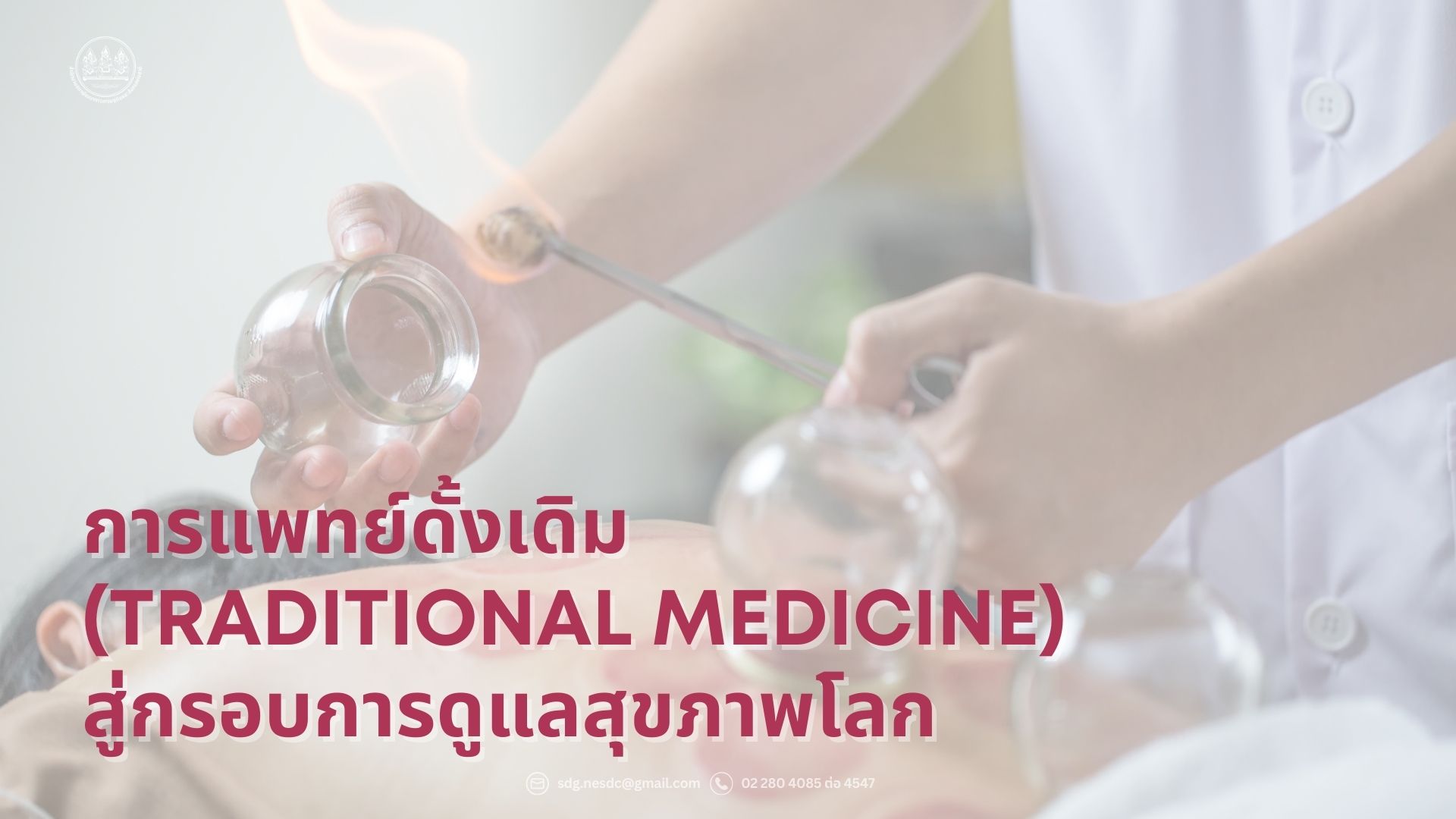
Traditional or indigenous medicine in each country has a long history, arising from knowledge, capabilities, and practices based on theories, beliefs, and experiences of indigenous peoples from diverse cultures, whether explainable or not, which are used for treating or healing physical health, including prevention, diagnosis, treatment of physical and mental illnesses. Millions of people choose traditional medicine approaches or as an alternative option for healthcare. Traditional medicine has contributed to creating fundamental medical texts and modern scientific advances, serving as an important starting point for modern medicines such as aspirin, artemisinin, as well as exercise approaches like yoga, all of which have their origins in traditional medicine.
The 78th World Health Assembly Adopts the “Draft Global Traditional Medicine Strategy 2025-2034”
On May 26, 2025, the World Health Organization held the 78th World Health Assembly at WHO Headquarters in Geneva, Switzerland. The Draft Global Traditional Medicine Strategy 2025-2034 was included in agenda item 13.8. Members of the World Health Assembly approved the draft strategy to advance the development of basic practices in traditional medicine, complementary medicine, and integrative medicine (Traditional, Complementary and Integrative Medicine: TCIM). In developing this strategy, member countries debated important components that should be included in the draft, such as creating reliable evidence base for traditional medicine practices, developing mechanisms or guidelines for regulation and safety, creating appropriate integrated healthcare service models, and certifying qualified medical practitioners.
This new draft strategy not only creates awareness about the role and knowledge base of indigenous traditional medicine among member countries, but also provides support for protecting indigenous rights, while promoting environmental sustainability and biodiversity conservation in the context of traditional and complementary medicine. Under the Global Traditional Medicine Strategy 2025-2034, the World Health Organization also aims to assist member countries in strengthening the evidence base for traditional medicine, complementary medicine, and integrative medicine, enhancing safety, quality, and effectiveness, facilitating the integration of traditional medicine, complementary medicine, and integrative medicine into health systems, while increasing effective and appropriate cross-sectoral cooperation. Additionally, the World Health Organization supports member countries in implementing and adapting the strategy by providing guidance and technical assistance as appropriate.
This new strategy aims to unlock the potential of traditional medicine, complementary medicine, and integrative medicine to develop health and well-being of the global population for the Sustainable Development Goals (SDGs), such as Goal 3: Ensure healthy lives and promote well-being for all at all ages, Goal 8: Promote sustained, inclusive and sustainable economic growth, full and productive employment and decent work for all, where creating value for local medicinal plants and developing them to standards can distribute income to communities, Goal 12: Ensure sustainable consumption and production patterns, where local natural resources including herbs are used efficiently. It also encompasses Universal Health Coverage (UHC).
The Draft Global Traditional Medicine Strategy 2025-2034 will create transformative changes in safe and effective universal access to diverse medical approaches, creating diverse medical alternatives based on cultural foundations, leading to appropriate and effective development or research of traditional medical knowledge, generating new knowledge arising from appropriate medical integration.
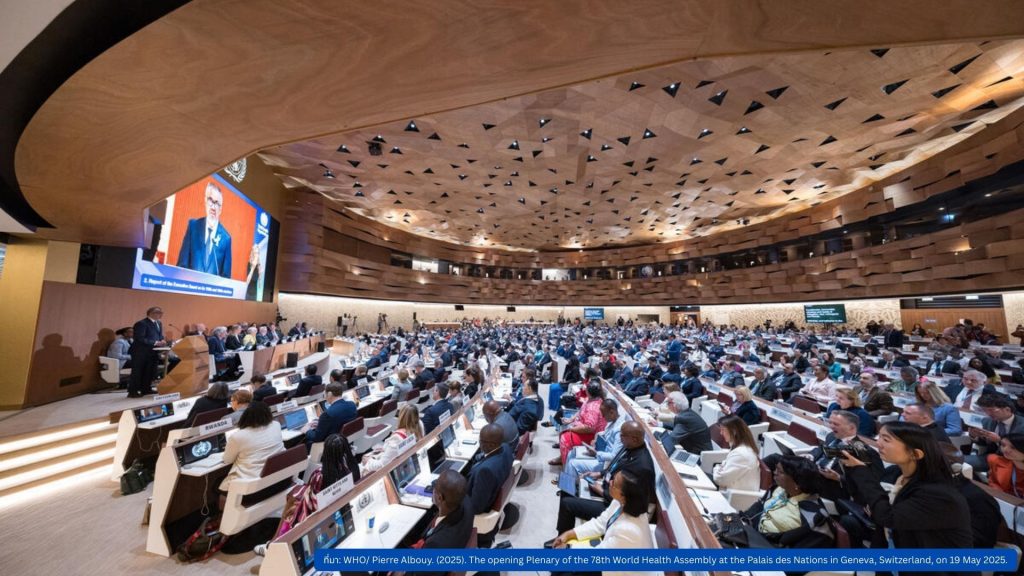
Opening ceremony of the 78th World Health Assembly on May 19, 2025
at WHO Headquarters, Geneva, Switzerland
Image source: WHO
Integrating traditional medicine into health systems remains a challenge for many countries, as some treatments cannot yet use scientific principles or empirical evidence findings, leading to ongoing concerns about treatment safety and effectiveness. Although many treatment forms, such as acupuncture or certain herbal medicines, currently have evidence supporting their safety and standards, the question remains whether incorporating science as part of validating cultural evidence of treatment would suppress or oppress indigenous cultures or traditional treatments. This draft strategy emphasizes the culture, beliefs, and traditional spirituality of indigenous peoples, and respects intellectual rights and indigenous rights for equitable access to quality treatment. Indigenous peoples have the right to maintain, control, protect and develop intellectual property related to traditional knowledge and can protect this knowledge from appropriation or unauthorized use.
Giving importance to diverse medical needs based on differences in lifestyle, cultural beliefs will create comprehensive, equitable medical services appropriate to different beliefs and cultures, while maintaining respect for traditional medical knowledge. This also promotes cultural exchange that will lead to true understanding of differences in medical cultural beliefs.
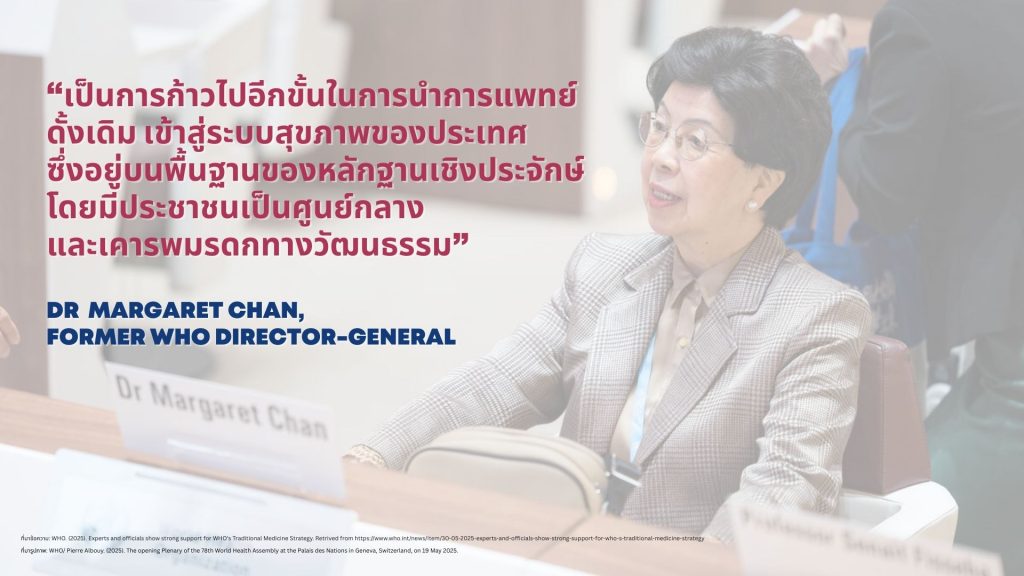
Image source: WHO
Southeast Asian Member Countries Jointly Promote Traditional Medicine to the Global Stage Fairly
The Southeast Asian region has ethnic, belief, and cultural diversity, resulting in diverse traditional medicine. Promoting traditional medicine into member countries’ medical systems is therefore a matter of importance to member countries for safety, effectiveness and standards of treatment for citizens, for development and research of traditional medicine to advance and have empirical evidence, support and develop medical personnel to have standards and proper certification. Currently, member countries have policies and strategies regarding integrating traditional medicine and complementary medicine into health service systems and are part of many countries’ management plans, with almost all countries able to implement such policies and strategies effectively.
At the 78th World Health Assembly, Thailand served as representative of the group of 11 Southeast Asian WHO Regional member countries in presenting 4 key demands to develop traditional medicine products to international standards, together with innovation or technology while protecting traditional knowledge based on fairness and respecting traditional culture.
1) Strengthening traditional medicine based on empirical evidence Promoting WHO to seriously support the creation of scientific evidence, particularly through regional research networks and the use of real-world data, while developing research methodologies that respect specific contexts and knowledge not recorded in writing. Additionally, calling for upgrading the Global Centre for Traditional Medicine in India to become a platform for international research and innovation cooperation.
2) Ethical innovation and digital health Supporting the application of digital technology and artificial intelligence (AI), but based on ethics, respecting culture, and promoting rather than replacing traditional knowledge, while providing appropriate data protection, creating equality in access, and maintaining data accuracy.
3) Urgently protecting traditional medical knowledge Calling for WHO to increase measures to protect traditional medical knowledge, particularly creating fair benefit-sharing mechanisms and supporting indigenous peoples’ rights in sustainable biodiversity management. This issue is particularly important in an era of rapid trade and digital transformation.
4) Creating strong monitoring and evaluation mechanisms Supporting mid-term strategy review in 2030 and pushing WHO to establish clear and measurable indicators to effectively track progress.
Situation and Challenges of Traditional Medicine and Complementary Medicine in Thailand
Thai traditional medicine has a long history, with evidence of traditional medicine use since before the Sukhothai Kingdom. Currently, statistics for drug use in Thailand’s public health system amount to approximately 70,543 million baht, of which herbal medicines account for 1,560 million baht, with herbal medicine use in the National Health Security System being only 408 million baht. The Ministry of Public Health has set a target to increase herbal medicine prescriptions in the National Health Security System to no less than 1,500 million baht by 2025 and no less than 3,000 million baht in 2026. Additionally, the Department of Thai Traditional and Alternative Medicine has cooperated with the National Health Security Office (NHSO) to announce a list of 32 herbal medicines on March 1, 2025, in a Fee schedule format, adjusting the reimbursement system to per treatment course, increasing prices for herbal medicines to promote increased use of herbal medicines as an option for patients and reduce drug imports from abroad, support upgrading Thai wisdom and create economic value in the country. Currently, Thailand has included 123 herbal medicines and Thai traditional medicine and complementary medicine services such as Thai massage, postpartum maternal rehabilitation into the universal health coverage system.
Thailand has integrated Thai traditional medicine and complementary medicine into the health insurance system to create health security for people to have treatment options and greater access to treatment systems, and has been able to implement this concretely. However, significant challenges for traditional medicine and complementary medicine in Thailand still exist, including lack of research evidence supporting the effectiveness and safety of traditional medicine and complementary medicine remains limited, there is a need to upgrade the quality of Thai traditional medicine personnel to become more specialized experts, and develop and apply digital technology for better services. Although increasing herbal medicine prices may benefit economic value creation, it may impact vulnerable patients’ access to standardized herbal medicines becoming more difficult. Becoming an aging society results in increased non-communicable diseases in society. Additionally, lifestyle and eating behavior changes among urban populations impact health problems, including hypertension, high cholesterol, obesity, including office syndrome, etc., causing modern medicine to accommodate a large number of patients. If Thailand has more complementary medicine and certified specialized medical personnel with increased standards, with research supporting clear treatment outcomes, it will distribute more options to patients, increasing equal access to standardized medicine.
Strategy and International Cooperation Coordination Division
National Economic and Social Development Council
References
Association of Southeast Asian Nations (ASEAN). (2023). Joint Report on the Situational Analyses of ASEAN Primary Health Care and Traditional and Complementary Medicine Capacities: Towards the Enhancement of Quality Health Care through Primary Health Care Capacities in ASEAN Member States. Retrieved from https://asean.org/wp-content/uploads/2024/03/Joint-Report-on-the-Situational-Analyses-of-ASEAN_rev21-Mar.pdf
Disha Shetty. (2025). WHO’s Big Push to Integrate Traditional Medicine into Global Healthcare Framework. Retrieved from https://healthpolicy-watch.news/whos-big-push-to-integrate-traditional-medicine-into-global-healthcare-framework/
POST TODAY. (2025). ‘Thailand’ Proposes 4 Demands to ‘WHO’ to Promote Traditional Medicine. Retrieved from https://www.posttoday.com/smart-life/724869
Thai PBS. (2025). Revealing Names of “Herbs” in Essential Drug List for Treating 10 Disease Groups. Retrieved from https://www.thaipbs.or.th/news/content/351698
Thailandplus. (2025). Department of Thai Traditional and Alternative Medicine Joins Southeast Asian Countries in Proposing 4 Demands to WHO. Retrieved from https://www.thailandplus.tv/archives/926829
World Health Organization. (2023). Integrating Traditional Medicine in Health Care. Retrieved from https://www.who.int/southeastasia/news/feature-stories/detail/integrating-traditional-medicine
World Health Organization. (2024). WHO Global Traditional Medicine Centre. Retrieved from https://iris.who.int/bitstream/handle/10665/381503/9789240109643-eng.pdf?sequence=1
World Health Organization. (2024, August). Regional consultation on Draft Global Strategy for Traditional Medicine 2025:2034 and to set the research priorities for WHO SEA Region. Bangkok. Thailand. Retrieved from https://iris.who.int/bitstream/handle/10665/379304/SEA-Trad.Medicine-94-eng.pdf?sequence=1
World Health Organization. (2025). Draft global traditional medicine strategy 2025–2034. Retrieved from https://apps.who.int/gb/ebwha/pdf_files/WHA78/A78_4Add1-en.pdf
World Health Organization. (2025). Experts and officials show strong support for WHO’s Traditional Medicine Strategy. Retrieved from https://www.who.int/news/item/30-05-2025-experts-and-officials-show-strong-support-for-who-s-traditional-medicine-strategy
World Health Organization. (2025). Seventy-eighth World Health Assembly – Daily update: 26 May 2025. Retrieved from https://www.who.int/news/item/26-05-2025-seventy-eighth-world-health-assembly—daily-update–26-may-2025#:~:text=Member%20States%20agree%20on%20a,TCIM)%20into%20the%20next%20decade
World Health Organization. (n.d.). Traditional, Complementary and Integrative Medicine. Retrieved from https://www.who.int/health-topics/traditional-complementary-and-integrative-medicine#tab=tab_1
Faculty of Traditional Thai Medicine, Prince of Songkla University. (2010). Let’s Get to Know Thai Traditional Medicine. Retrieved from https://www.ttmed.psu.ac.th/th/blog/8
Faculty of Traditional Thai Medicine, Prince of Songkla University. (2011). History of Thai Traditional Medicine in Pre-Buddhist Era. Retrieved from https://www.ttmed.psu.ac.th/th/blog/71
Theeraphol Buakratok. (2025). Revealing Knowledge of “Ancient Medicine” That Helps Save Modern Lives. Retrieved from https://today.line.me/th/v2/article/7NgjXwr
Thai Government. (2025). “Somsak” Supports Doctors Using Herbal Medicines, Reducing Foreign Drug Imports, Setting Target to Increase Herbal Medicine Use to No Less Than 3,000 Million Baht in 2026. Retrieved from https://www.thaigov.go.th/news/contents/details/93736
Information Office, Office of the Permanent Secretary, Ministry of Public Health. (2025). Department of Thai Traditional and Alternative Medicine Clarifies Policy to Promote Thai Herbs in Hospitals, Implementation Based on Voluntary Basis, Does Not Affect Treatment Quality. Retrieved from https://pr.moph.go.th/online/index/news/318433online/index/event
Related Documents