


“From discarded old televisions to expired mobile phones, the global volume of electronic waste is increasing at an alarming rate. Recent research findings indicate that the challenges from electronic waste are becoming increasingly severe, with currently less than half of the world’s countries implementing concrete electronic waste management policies. This situation serves as a warning signal of the urgent need to develop effective regulations to promote collection and recycling processes. The Global E-waste Monitor report enables us to continuously track developments and determine important decision-making directions for driving towards a circular economy system for electronic products.” – Cosmas Luckyson Zavazava
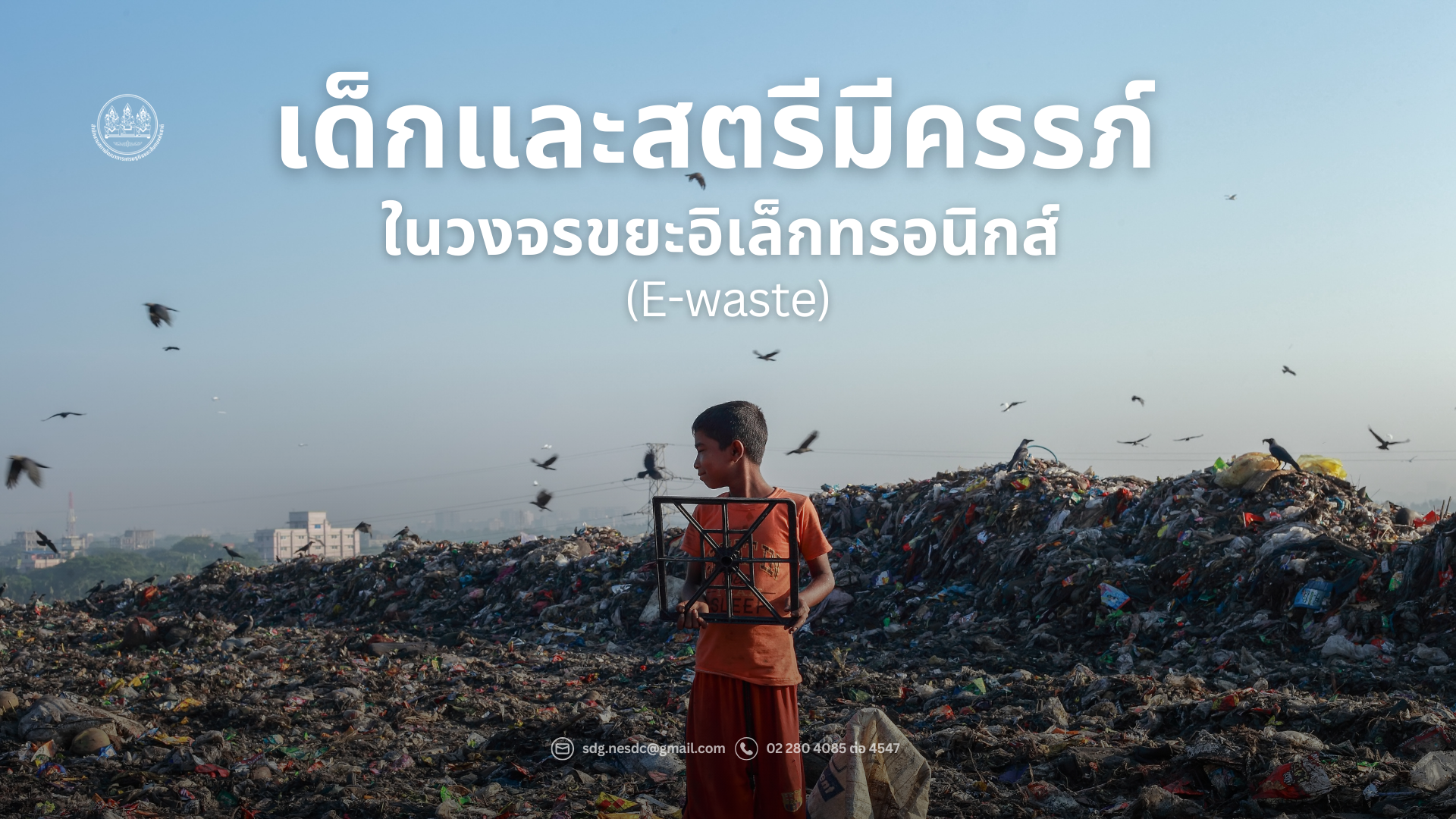
In an era of rapid digital technology advancement, electronic waste or E-waste has become one of the most challenging environmental problems of the 21st century. However, only 22.3% of electronic waste is properly managed through recycling processes, reflecting gaps and challenges in efficiently managing this type of waste. Electronic waste is not only a threat to the environment but also a valuable resource that can be reused if properly managed. This presents a significant opportunity for communities and entrepreneurs to generate income from electronic waste management, particularly in low and middle-income countries that lack appropriate law enforcement, infrastructure, and knowledge of safe recycling.
Amid such circumstances, raising awareness about the impacts of improper electronic waste management and promoting sustainable practices in electronic waste management is key to mitigating health and environmental impacts. This article will explore the current situation of electronic waste, its impacts on health and the environment, and propose sustainable management approaches that can create a balance between economic development and protecting the environment and public health.
- Electronic Waste: The Silent Threat to Health and Environment in the 21st Century
Electronic waste (E-waste) is increasing at a rate five times faster than recycling, according to data from the Global E-waste Monitor (GEM) Report No. 4, prepared by the International Telecommunication Union (ITU) and the United Nations Institute for Training and Research (UNITAR), which states that in 2022, the world generated 62 million tons of electronic waste, which if loaded onto 40-ton trucks would require more than 1.55 million vehicles or could be lined up around the Earth’s equator. However, only 22.3% was properly managed, and it is predicted that by 2030, the recycling rate will decrease to only 20% due to the rapid increase in waste volume exceeding the capacity of management systems to keep pace. The factors accelerating this situation include multiple dimensions: rapid technological advancement, increased consumption, limitations in equipment repair, shortened product lifecycles, widespread adoption of electronic devices across all sectors, design that does not consider recycling, and inadequate waste management infrastructure. Additionally, electronic waste contains more than 1,000 types of hazardous chemicals that can spread to the environment through air, water, and soil, causing severe impacts on ecosystems and human health, particularly vulnerable groups such as children and pregnant women.
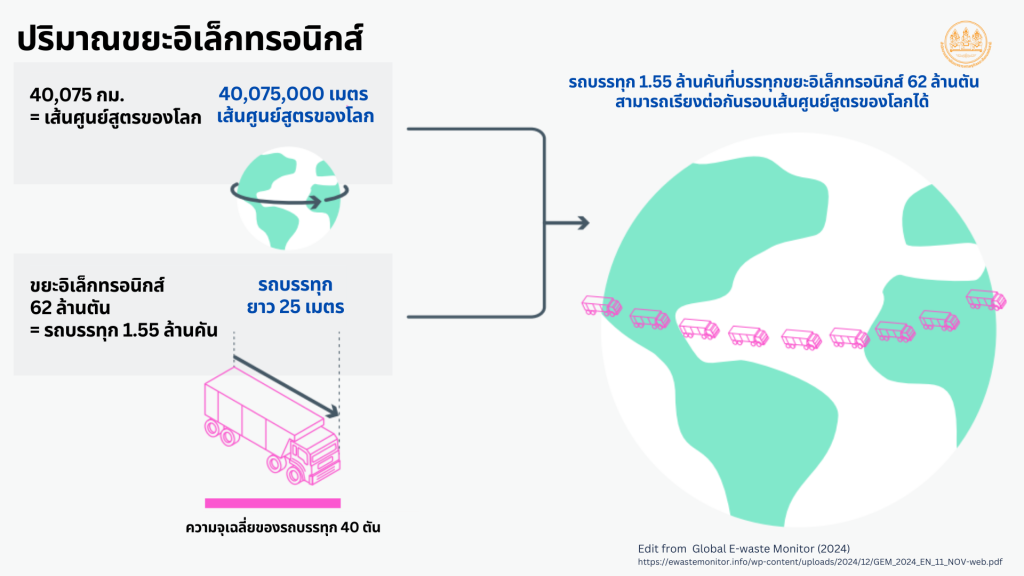
Source: Global E-waste Monitor (2024)
Furthermore, substandard recycling processes are one of the main causes making this problem more severe. In many developing countries, large amounts of electronic waste are recycled using dangerous methods such as open burning, acid dissolution for metal separation, or washing with harsh chemicals, which not only cause air and water pollution but also affect the health of workers and surrounding communities. Data from the International Labour Organization (ILO) in 2021 indicates that there are as many as 16.5 million children working in the waste sector, many of whom are involved in electronic waste processing, putting them at risk of direct exposure to these toxins.
Despite efforts to establish international regulations to control cross-border movement of electronic waste, illegal smuggling to developing countries remains a common problem. Electronic waste management continues to be complex and risky, as this waste often contains hazardous chemicals such as lead, mercury, and dioxins, which have severe impacts on human health and ecosystems.
- Improper Electronic Waste Management
Improper electronic waste (E-waste) management remains a significant problem even in areas with good waste management systems. Currently, it is found that large amounts of electronic waste are disposed of mixed with general municipal waste and end up in landfills, resulting in risks to the environment and human health as toxins from electronic waste can seep into groundwater and drinking water sources. Electrical and electronic equipment contains components of various hazardous chemicals. Although users do not receive these substances directly during use, when they become waste and are managed in environmentally unfriendly ways, these toxins are released into the environment. Common improper electronic waste management methods include unsafe dismantling of valuable components, dumping electronic waste on the ground or in water sources, burying with general waste, open burning or using heat to separate components, soaking or washing with acid, stripping or tearing plastic without protective equipment, and manual dismantling without following safety measures. All these methods have severe impacts on the environment and human health, as they cause the release of toxins that contaminate air, soil, dust, and water sources, both in recycling areas and surrounding communities. Open burning and heat application are particularly the most dangerous methods.
- Dangers from Improper Electronic Waste Management
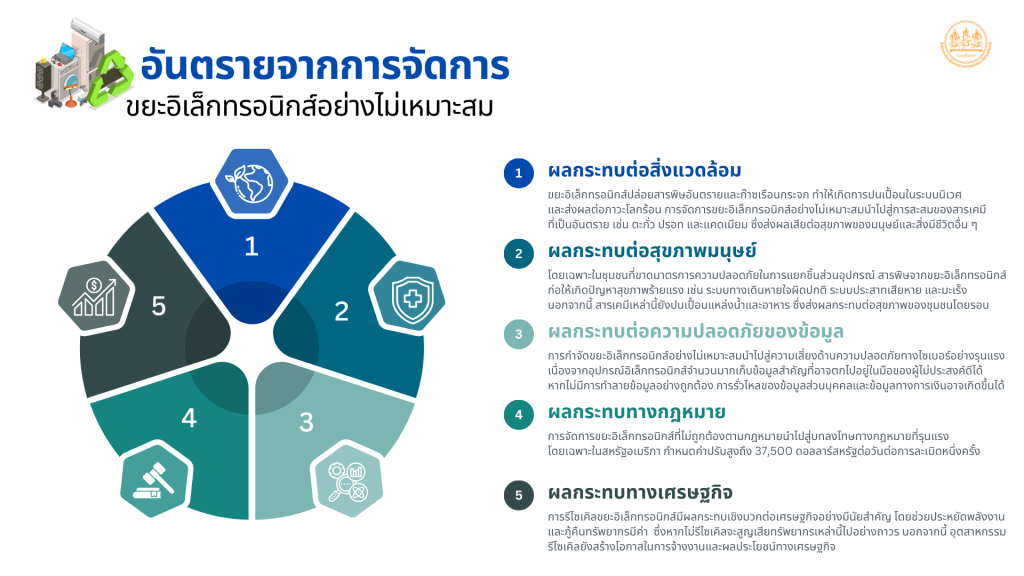
In an era where technology plays a crucial role in daily life, electronic waste problems are increasing due to continuously rising demand for electronic devices. Improper electronic waste management has impacts in multiple areas including environment, health, data security, legal, and economic aspects, which are critical issues that require urgent resolution.
Environmental impacts, particularly the release of toxins and greenhouse gases. Electronic waste accounts for approximately 70% of hazardous toxins found in the environment. Electronic devices such as computers, mobile phones, and televisions contain hazardous chemicals including lead, mercury, and cadmium. When these substances decompose, they seep into soil and water sources, contaminating ecosystems and endangering plants and animals. It is predicted that by 2030, burning electronic waste will release approximately 852 metric tons of greenhouse gases, affecting global warming and overall air quality.
Impacts on human health, particularly in communities where electronic device dismantling occurs without safety measures. Released toxins such as heavy metals and flame retardants may cause respiratory problems, skin irritation, nervous system disorders, and cancer, especially children who are at high risk of exposure to hazardous substances. Additionally, chemicals from electronic waste may contaminate drinking water sources and food, causing health problems in surrounding communities.
Impacts on data security. Unsafe electronic waste disposal not only destroys the environment and health but also risks leakage of important data. Many electronic devices store valuable data even after being discontinued. Without proper data destruction, personal data and financial information may fall into the hands of criminals. A 2023 report found that devices from Australian government agencies and several large companies were disposed of without deleting important data, creating severe cybersecurity risks.
Legal impacts. In many countries with strict laws controlling electronic waste disposal and recycling, for example, in the United States, the Environmental Protection Agency (EPA) and the Resource Conservation and Recovery Act (RCRA) impose maximum penalties of up to $37,500 per day per violation. Neglecting these regulations may result in businesses facing lawsuits, reputation damage, and loss of public confidence.
Economic impacts. Recycling 1 million laptops can save energy equivalent to the electricity used in 3,500 homes in the United States per year. Electronic devices also contain large amounts of valuable metals such as gold, silver, and copper. Recycling 1 million mobile phones can recover over 35,000 pounds of copper, 772 pounds of silver, 75 pounds of gold, and 33 pounds of palladium. Disposing of electronic waste without recycling permanently loses these resources and misses opportunities to create jobs in the recycling industry, which in the United States alone created 681,000 jobs and provided total wages of $37.8 billion in 2012.
Lost opportunities. It is estimated that unrecycled electronic waste is worth up to $57 billion in valuable metals, but only $10 billion is properly recovered. Proper electronic waste recycling can help reduce demand for new materials, reduce environmental impacts, and promote sustainability in the electronics industry.
- Children and Pregnant Women Face Special Risks from Electronic Waste Hazards
“With continuously increasing production and disposal volumes,
the electronic waste tsunami is threatening human life and health.
Just as the global community has cooperated to protect oceans and ecosystems
from plastic and microplastic pollution, we need to unite to protect our most valuable resource,
which is children’s health from the increasingly severe threats of electronic waste.“
– Dr Tedros Adhanom Ghebreyesus
Amid the escalating global electronic waste crisis, children and pregnant women have become the most vulnerable groups suffering the most severe impacts. The Children and Digital Dumpsites report in 2021 found that 12.9 million women worldwide work in the informal electronic waste management sector involving collection, sorting, dismantling, and recycling of electronic equipment that is not under appropriate environmental and safety control or standards, putting both the women themselves and unborn babies at risk of direct toxic exposure. Meanwhile, more than 18 million children and adolescents worldwide, including children as young as 5 years old, are drawn into informal electronic waste recycling cycles because their hands are smaller and more agile than adults, making them more efficient at dismantling electronic device components. Additionally, many children live near electronic waste recycling sites, exposing them to hazardous toxins, particularly lead and mercury, which medical studies confirm can permanently damage children’s intellectual development.
Children’s vulnerability to toxins in electronic waste is due to their smaller body size, causing them to receive toxins in higher proportions relative to body weight. Children’s brains and nervous systems are still developing, making them more susceptible to damage. Combined with higher breathing and metabolic rates than adults, children absorb more toxins. Additionally, children’s ability to eliminate toxins from their bodies is 72% lower than adults, resulting in children being 3-4 times more vulnerable to toxins than adults.
Health impacts on children from electronic waste exposure are severe. Children exposed to toxins from electronic waste show 32% increased lung function changes and respiratory system abnormalities. Exposure to these chemicals causes DNA damage, increasing cancer risk by up to 45% in the future, including thyroid disorders and increased likelihood of chronic diseases when they become adults.
Health impacts on pregnant women affect not only women’s health but also unborn babies who are in the most critical developmental period of life. Pregnant women exposed to toxins have 28% increased risk of miscarriage and 35% higher premature birth rates. Babies born to mothers exposed to toxins often weigh 200-400 grams below average, which is the beginning of other long-term health problems. When these children grow up, they tend to have 42% higher rates of Attention Deficit Hyperactivity Disorder (ADHD), behavioral problems, emotional control issues, and 18-25% reduced thinking and language skills on average.
- Sustainable Electronic Waste Management and Prevention Approaches
The electronic waste (E-waste) problem is a global challenge that is becoming increasingly severe alongside technological growth and rapidly increasing electronic device consumption. Managing this problem requires comprehensive and integrated multi-dimensional approaches including legal, public health, environmental, and social aspects.
International legal and policy oversight. Effective enforcement of international agreements, particularly the Basel Convention, which is a crucial mechanism for controlling cross-border movement of hazardous waste. International cooperation will help prevent illegal smuggling of electronic waste from developed countries to developing countries that lack infrastructure for safe electronic waste management.
Development of national laws and measures. Designing and enforcing effective national electronic waste management laws, particularly the Extended Producer Responsibility (EPR) principle that requires manufacturers to be responsible for their products throughout their lifecycle, including disposal of product remains after use. This will help create incentives for manufacturers to design more environmentally friendly products and support systematic product take-back systems.
Integration of health and environmental protection measures. Establishing restrictions or prohibitions on the use of hazardous chemicals in electronic products, such as lead, mercury, and cadmium, will help reduce health and environmental impacts from the source. Product standards should be established in accordance with international standards such as the European Union’s RoHS (Restriction of Hazardous Substances) regulation.
Monitoring and inspection of electronic waste disposal sites. Establishing strict monitoring and surveillance systems for electronic waste disposal sites and surrounding communities to prevent toxic contamination of the environment and communities, particularly contamination in soil, groundwater, and air. Regular toxic substance measurements and health risk assessments for people in at-risk areas should be conducted.
Upgrading informal recycling processes. Improving informal electronic waste recycling to be safer through safety training, appropriate technology support, and creating fair market access to improve the quality of life for workers in this sector while reducing environmental impacts.
Knowledge building and education. Developing curricula and educational programs for medical and public health personnel at all levels regarding the health impacts of electronic waste, particularly on vulnerable groups such as children and pregnant women. Building social awareness through public media and various campaign projects will help create sustainable consumption behaviors and proper electronic waste management.
Protection of child labor and vulnerable groups. Eliminating child labor in the electronic waste recycling industry through strict labor law enforcement, creating educational and career alternatives, and supporting at-risk families. Social protection measures for families dependent on income from electronic waste recycling activities should be developed alongside law enforcement.
The electronic waste problem is a crisis that requires urgent resolution, particularly the impacts on vulnerable groups including children and pregnant women who are at higher risk of toxins remaining in electronic devices than other groups. Managing this problem requires integration of law, technology, and society. Developing efficient management systems alongside creating awareness and shared responsibility among government, private sector, and citizens will be key to reducing electronic waste impacts and creating a more sustainable society. Ignoring this problem not only
causes loss of valuable resources but also has long-term health impacts on future generations, who are the future
of this world.
Strategy and International Cooperation Coordination Division
National Economic and Social Development Council
References
4thbin. (2024). The Hidden Dangers of Improper E-Waste Disposal. Retrieved from https://www.4thbin.com/blogs/hidden-dangers-improper-e-waste-disposal
Asina Pornwasin. (2021). TES: Transforming “Waste” into “Value”. Retrieved from https://www.thestorythailand.com/11/02/2021/13326/
International Labour Organization. (2021). Child Labour. Retrieved from https://www.ilo.org/projects-and-partnerships/projects/child-labour
Techtimes. (2023). Companies Are Disposing Old Computers Improperly, Your Data Might Be At Risk. Retrieved from https://www.techtimes.com/articles/289539/20230326/companies-disposing-old-computers-improperly-data-risk-e-waste.htm
Unitar. (2024). Global e-Waste Monitor 2024: Electronic Waste Rising Five Times Faster than Documented E-waste Recycling. Retrieved from https://unitar.org/about/news-stories/press/global-e-waste-monitor-2024-electronic-waste-rising-five-times-faster-documented-e-waste-recycling
Unitar. (2024). The global E-waste Monitor 2024 – Electronic Waste Rising Five Times Faster than Documented E-waste Recycling: UN. Retrieved from https://ewastemonitor.info/wp-content/uploads/2024/12/GEM_2024_EN_11_NOV-web.pdf
World Health Organization. (2021). Soaring e-waste affects the health of millions of children, WHO warns. Retrieved from https://www.who.int/news/item/15-06-2021-soaring-e-waste-affects-the-health-of-millions-of-children-who-warns
World Health Organization. (2024). Electronic waste (e-waste). Retrieved from https://www.who.int/news-room/fact-sheets/detail/electronic-waste-(e-waste)
World Health Organization. (2024). Electronic waste: Digital dumpsites and children’s health. Retrieved from https://www.who.int/news-room/questions-and-answers/item/children-and-digital-dumpsites-e-waste-and-health
Related Documents