Exploring Thailand’s Gender Equality Situation
Sustainable Development Goal 5 focuses on achieving gender equality and empowering women by addressing various challenges to ensure that women and girls have access to diverse knowledge, develop their capabilities, and increase women’s roles in society, work, and politics on an equal basis. This includes promoting understanding and values that respect human dignity for all, such as the right to education and work, the right to choose a spouse at an appropriate age, while ending discriminatory practices between genders, sexual abuse, and all forms of physical and psychological violence.
Overview of Progress Status for Sustainable Development Goal 5
Gender Equality at the Global Level
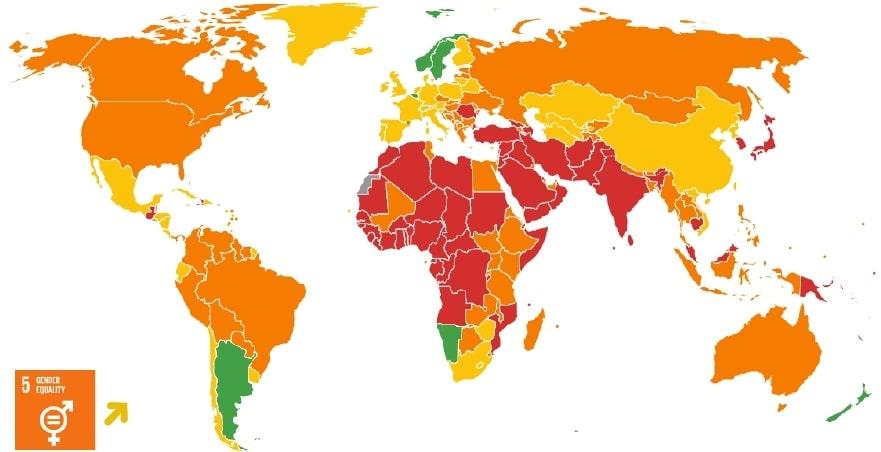
According to the Sustainable Development Report 2023 by the United Nations Sustainable Development Solutions Network (SDSN), the global progress status of Sustainable Development Goal 5 on gender equality shows slight improvement but remains under significant challenges (indicated in orange). Only 7 countries out of 166 have achieved gender equality goals: Belgium, New Zealand, Norway, Sweden, Andorra, Argentina, and Namibia, most of which are developed countries that are members of the Organisation for Economic Co-operation and Development (OECD countries).
The major challenges in achieving gender equality stem from deeply rooted social norms and attitudes that have persisted for a long time, creating binary gender thinking, male/female categorization based on biological sex, gender myths leading to unfair discrimination, contempt/devaluation of others based on gender, and lack of respect for basic human rights of women and children in society. In many cases, women are denied access to basic education or standard healthcare systems, assigned sole responsibility for household duties, making work-life balance difficult for women, and frequently becoming victims of violence and rights violations from those around them. This results in many women lacking resources and opportunities to develop their potential or access suitable and valuable work. There are also gender income gaps from different wage rates and unequal opportunities and support for career advancement between genders. These challenges limit the roles and opportunities of women (and alternative genders) in public, economic, and political sectors, remaining unequal to men, which hinders the development of an inclusive, equal, and fair society.
Regarding Thailand’s gender equality situation, the overall gender equality between men and women has improved. The Gender Inequality Index for 2021 scored 0.333, improving from 0.408 in 2016 (according to UNDP’s revised index), reflecting progress in gender equality in Thai society. This results from incorporating such issues into the Constitution of the Kingdom of Thailand B.E. 2560 and national development plans at all levels. Additionally, all government agencies and local administrative organizations are required to implement Gender Responsive Budgeting (GRB) policies to promote gender equality and reduce overall social inequality.
Thailand’s Gender Inequality Index

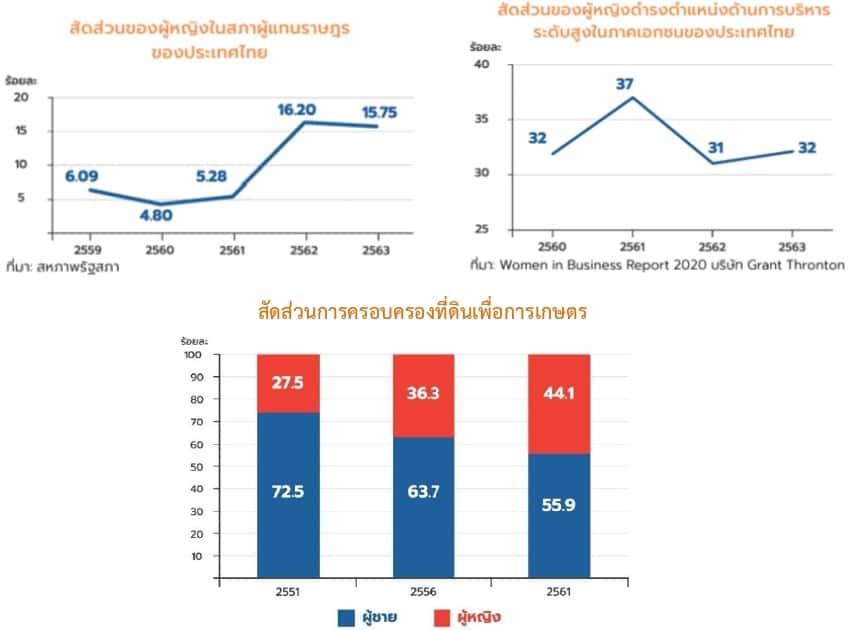
According to 2020 statistics, Thailand had 15.75% female members of the House of Representatives, increasing from 6.09% in 2016, and 86% of companies had at least one woman in senior executive positions, up from 74% in 2017, reflecting increased political and business roles for women. Additionally, women’s land ownership trends are increasing, with the ratio of agricultural land ownership by women to men at 44.1 to 55.9 in 2018, up from 36.3 to 63.7 in 2013. Furthermore, internet usage among women aged 6 and above reached 65.6%, increasing from 50.7% in 2016.
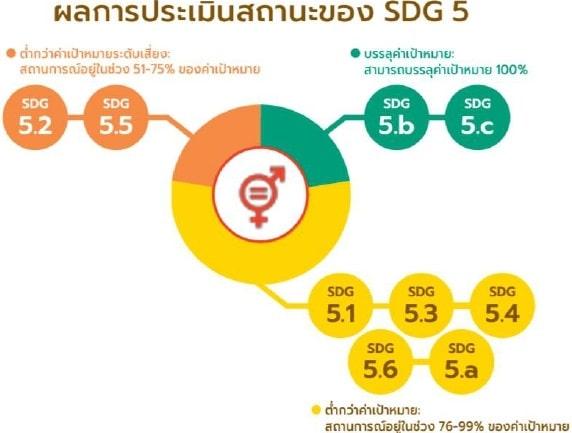
Regarding the assessment of Thailand’s progress toward achieving Sustainable Development Goal 5 for gender equality, according to the 2023 Sustainable Development Report by the Sustainable Development Solutions Network, Thailand has improved overall scores but remains at an insufficient level to achieve the goal within the specified timeframe due to several significant ongoing challenges, particularly increasing women’s roles in politics and governance. This aligns with the Thailand SDGs Progress Report for the first 5 years (2016-2020) by the National Economic and Social Development Council (NESDC), which found that 7 out of 9 sub-targets remain below target levels. Five sub-targets have implementation status 76-99% below targets: SDG 5.1, 5.3, 5.4, 5.6, and 5.a (shown in yellow), and two sub-targets have implementation status at risk level (51-75% below targets): SDG 5.2 and 5.5 (shown in orange).

- SDG 5.2 Eliminate all forms of violence against women and girls in public and private spheres, including trafficking, sexual exploitation, and other forms of exploitation. Violence including physical and psychological harm, sexual abuse, neglect and abandonment, and coercion for exploitation of children and women continues to occur, with most violence coming from family members.
- SDG 5.5 Ensure women’s full and effective participation and equal opportunities for leadership at all levels of decision-making in political, economic, and public life. Women continue to have less participation in policy-level decision-making than men in political, economic, and public action decisions due to attitudes, values, and culture that remain attached to women’s roles in family care and household work.
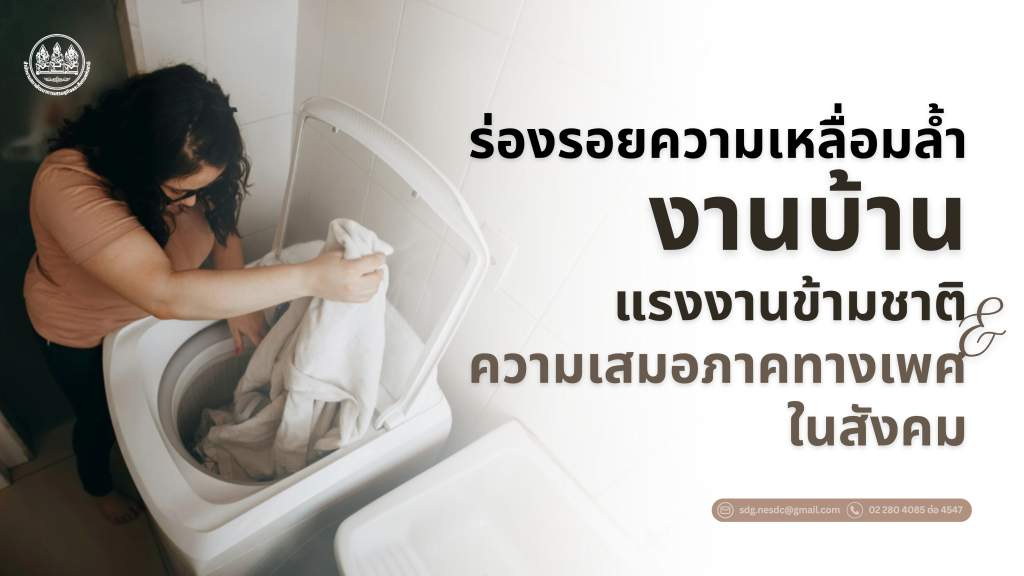
Therefore, to drive Thai society toward gender equality and increase the role of women and girls as important forces in driving national prosperity in all dimensions, Thailand has important missions to urgently address violence against women and push for social changes to ensure that women can participate and have equal opportunities in politics, economics, and society, enabling Thailand to achieve sustainable development goals concretely and comprehensively. Gender equality is an issue that contemporary Thai society increasingly focuses on, resulting in various sectors beginning to implement actions toward creating gender equality, including government, private sector, and civil society that have joined forces to implement creative social projects together, such as the “New Gen Say No” campaign to end violence against children, women, family members, and all forms of social violence, the “Dragonfly 360” project to campaign for driving Thai society toward gender equality by promoting women’s potential and creating inspiration, and the “Housework is Everyone’s Responsibility, All Genders Can Do It” campaign to end violence against women and create good understanding within families.
Additionally, to reduce gender myth gaps in future society, the government should urgently promote the role of education and mass media sectors in instilling good attitudes and creating new norms for future society to recognize the importance of gender equality and jointly change practices to achieve fairness for all genders. This involves developing personnel capabilities to have deep knowledge and understanding of basic human rights principles, allocating resources, and designing measures that creatively respond to social situations and contexts to promote education and mass media sectors’ role in conveying values of respect for equal human rights and dignity for all genders, including expanding educational opportunities that benefit all genders, ages, and statuses to reduce inequality in all dimensions while aiming for truly inclusive and fair social development for everyone.
We invite you to follow Thailand’s progress on gender equality and women and girls empowerment under SDG 5 during the 5-year period (2016-2020). How far has Thailand progressed? What has been implemented? What are the major obstacles? And how should we move forward for Thailand to achieve this goal by 2030?
Strategy and International Cooperation Coordination Division
National Economic and Social Development Council
Related Documents